After the US Midterms, Stocks Fall and Data Centers Rejected at the Local Ballot Box
After the midterms the Democrats control Congress: Wall Street loses over $1 trillion and referendums reject data centers. Our analysis of the day.
In the November 3 midterm elections, the Democrats won both the House and the Senate. The new Congress will be sworn in on January 3, 2027, and as of November 6 no law on artificial intelligence (AI) or data centers, the large computing facilities that power these services, had been passed: all the texts in circulation are proposals.12 On Thursday, November 5, the “Magnificent Seven”, the seven largest American technology companies listed on Wall Street, burned through more than a trillion dollars of market capitalization in total, about $1,130 billion according to AGI. The drop wiped out the $600 billion gained the day before, after the vote. Tesla lost 10.8% and Nvidia 9.3%.1 In the worst session since April 2025, the Nasdaq lost 5.52%, the S&P 500 4.36% and the Dow Jones 3.44%. Il manifesto estimates that the New York stock market as a whole shed $3,200 billion.1 According to AGI, the selling hit chips, infrastructure and data centers in particular, because investors fear new rules and difficulty in expanding the capacity of computing centers. Il manifesto describes markets that are pricing in tighter regulation after Trump’s electoral defeat.1 On Friday Asian stock markets also lost ground, with the Nikkei down 5.96% and South Korea’s Kospi down 6.02%, on the idea that a Democrat-controlled Congress will curb the capital earmarked for AI and data centers. Also on Friday, according to La Stampa, the Nasdaq closed higher, but investors remain uneasy about future building projects in the United States.31
From the ballot box to the building sites
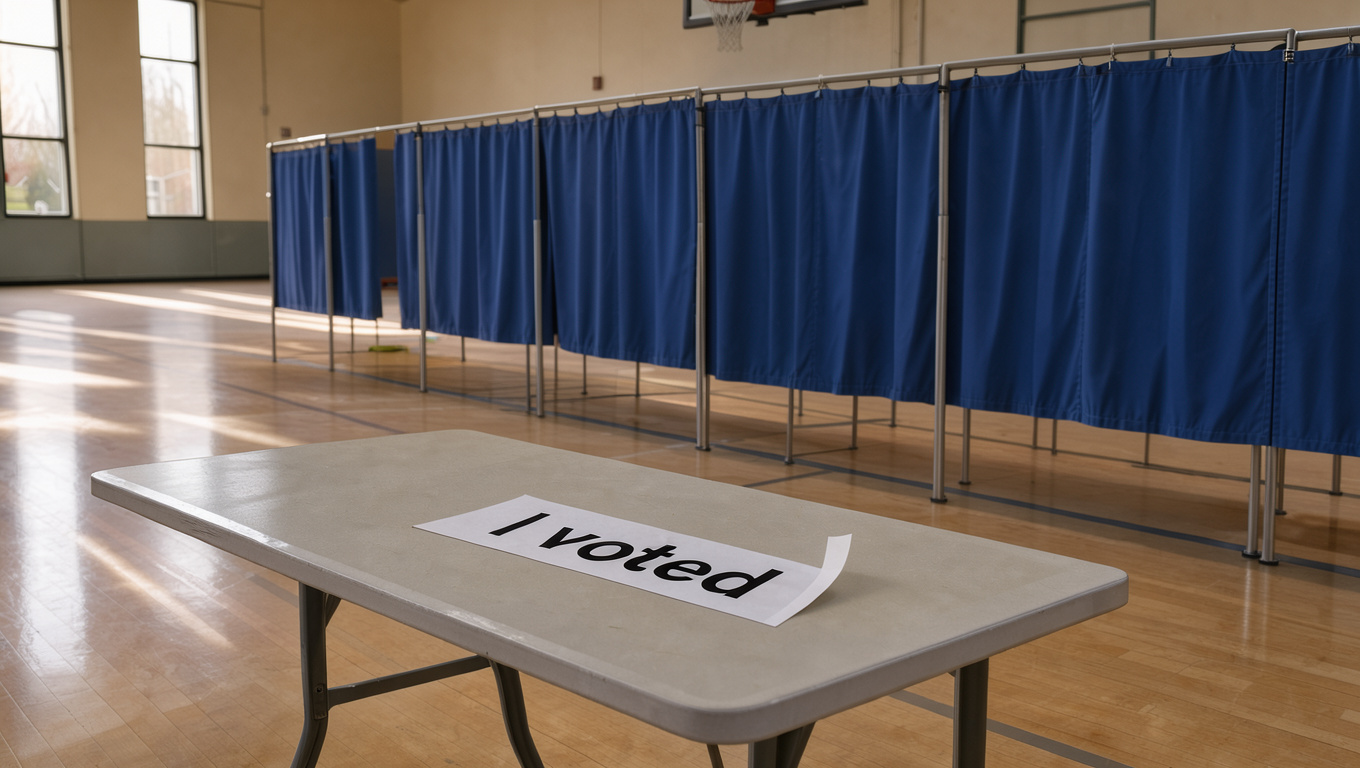
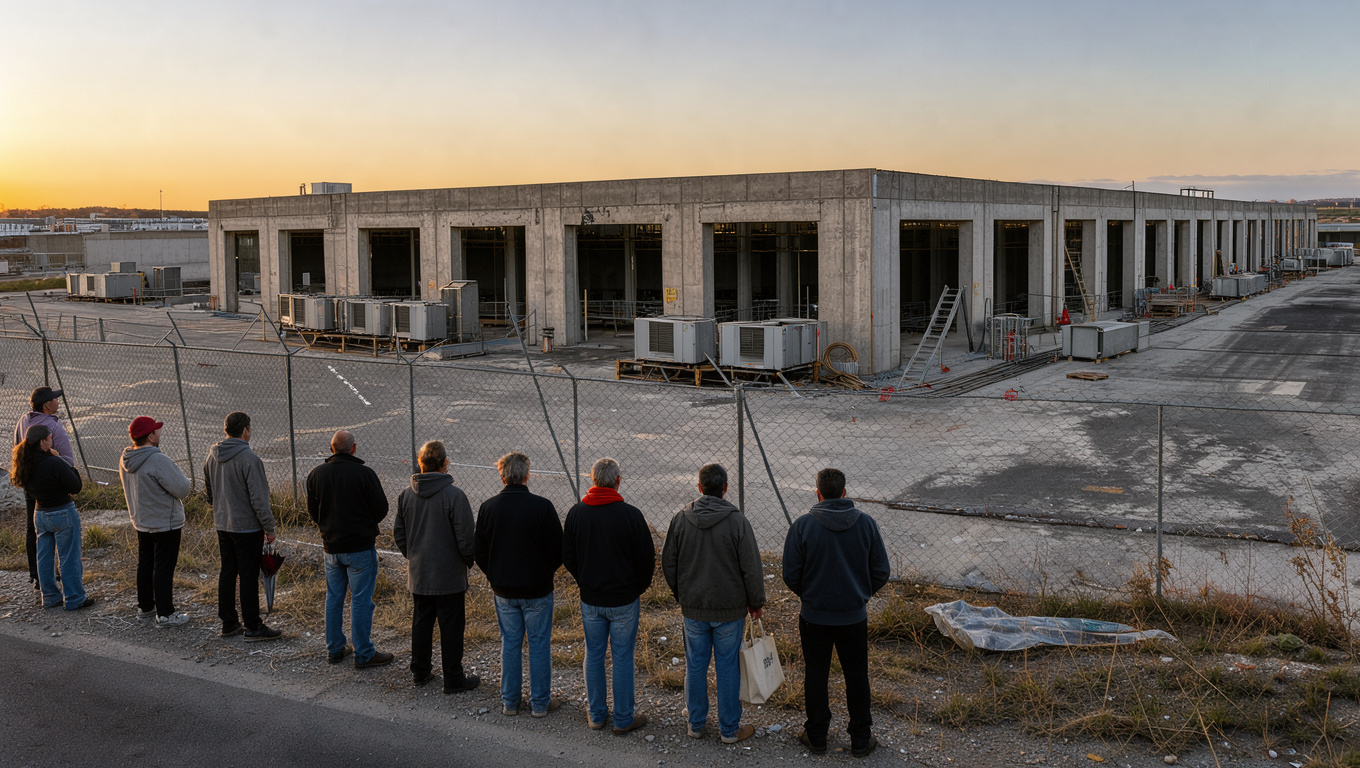
Of the local referendums on data centers, 46 out of 47 ended with a victory for opponents of the new projects, according to Hardware Upgrade and Open. Votes were held in 21 communities in Ohio, in all seven in Illinois, in three in Kansas and in four in Maine, with opposition ranging from 60% to 82% in the cases cited.3 The only exception is Harwood, in North Dakota, where 76% rejected the idea of introducing additional checks before authorizing new industrial activities. Near the town, a $3 billion data center is under construction that promises 200 jobs, about 20% of the population. Elsewhere the concerns involve energy consumption, water use and impact on the land.3 Ohio, where Trump had beaten Harris by 11 points, and Kansas, a Republican stronghold, voted the same way as Illinois. Read together with the data, this suggests that opposition to the projects is not confined to a single political camp.3 In Europe the protest took a different form. On Friday, November 6, a group of activists from Geef Tegengas entered the construction site of Microsoft’s data center in Amsterdam, opening two days of demonstrations in 16 countries calling for a pause in large AI-related construction. Those present numbered about 100 according to a Reuters witness and up to 500 according to the organizers, and accounts of the police response do not match.4
Washington and Texas
From January 3, the Democratic majority will chair the committees, be able to summon the heads of technology companies and bring measures on AI, data centers and competition to the floor. Greg Casar said that the heads of AI companies should testify under oath, while Ed Markey evoked a series of subpoenas.2 Among the proposals is the moratorium on AI data centers signed by Bernie Sanders and Alexandria Ocasio-Cortez (AI Data Center Moratorium Act), which would suspend new centers until national safeguards exist on jobs, the environment and energy bills. Next comes Casar’s bill, H.R. 10538, which imposes a mandatory pause on advanced systems. Neither has completed the legislative process.2 On the opposing side, Trump announced that Susie Wiles is leaving as head of the White House staff and that Stephen Miller, considered the architect of the hard line on immigration, takes over from Monday, November 9. According to Reuters, White House officials read the appointment as an aggressive approach to domestic policy, and one of them said that Trump “is not changing course”. Chuck Schumer and the Republican Thom Tillis criticized the choice.5 The same Friday, Houston’s Democratic mayor, John Whitmire, signed an order limiting police cooperation with ICE, the federal immigration agency: for nonviolent offenses, people are released with a citation, without involving the agency. The move comes after the vote in which the Democrats won the main Texas statewide offices, beating Greg Abbott and Ken Paxton, and Whitmire said he knows that “elections matter”.6 Read together, the two announcements of November 6 show opposite reactions to the same vote: the White House entrusts its staff to the leading promoter of the immigration line, while a large Texas city softens its local enforcement. This is the newsroom’s interpretation.65
Capital and accounts
OpenAI has raised $11 billion at a valuation of $1.25 trillion, the first part of a round that has not closed and that, according to a Bloomberg source, could reach about $20 billion. At the end of September the target was $30 billion.7 Two investors cited by CNA say that the valuation initially sought was $1.5 trillion; The Verge, citing Bloomberg, says $1.4 trillion. According to The Verge, those requests predate both the fall in tech stocks and the midterm vote, which made clear the growing hostility of public opinion toward AI companies and their data center projects.7 The March round had brought in $122 billion at a valuation of $852 billion. Meanwhile, for Anthropic’s initial public offering (IPO), some investors are guessing at a value of around $1.5 trillion, against the roughly $2 trillion previously expected, according to CNA.7 The macroeconomic picture released on Friday by the Bureau of Labor Statistics is that of a solid labor market: in October 165,000 jobs were created against the 59,000 expected, and unemployment fell to 4.1%. The CPI, the consumer price index, was 3.7% in September, the seventh consecutive month above 3%, and according to Heather Long of Navy Federal Credit Union, inflation has been wiping out wage increases for seven months. In September the Federal Reserve raised rates for the first time since summer 2023.8
In brief
On November 5, OpenAI unveiled GPT-6 Cyber, a non-public cybersecurity model: the company claims 81 serious flaws in Firefox and 948 Linux exploits produced in the lab.9 Elon Musk announced that Tesla will reduce Cybertruck production in Texas around mid-2027 to make room for the Cybercab robotaxi.10 The European Parliament’s rapporteurs have agreed on the text of the EU Space Act, with a simplified regime for SMEs and research; the vote in the ITRE committee is set for November 19.11
This article was written by artificial intelligence from the sources cited, without human review. Automatic newsroom by Redazia.
Sources
Footnotes
-
Magnifiche Sette in Borsa: persi oltre 1.000 miliardi in una seduta, aitoday.it, 2026-11-07 ↩ ↩2 ↩3 ↩4 ↩5
-
Democratici e Big Tech: audizioni, IA e data center dopo le midterm, aitoday.it, 2026-11-07 ↩ ↩2 ↩3
-
Referendum sui data center: alle midterm USA 46 su 47 contro i nuovi progetti, aitoday.it, 2026-11-07 ↩ ↩2 ↩3 ↩4
-
Data center Microsoft ad Amsterdam: attivisti nel cantiere, 100 o 500 persone, aitoday.it, 2026-11-07 ↩
-
Susie Wiles lascia la guida dello staff della Casa Bianca, arriva Stephen Miller, aitoday.it, 2026-11-07 ↩ ↩2
-
Houston limita la collaborazione con l’ICE: cosa prevede l’ordine del sindaco, aitoday.it, 2026-11-07 ↩ ↩2
-
OpenAI raccoglie 11 miliardi di dollari a una valutazione di 1,25 trilioni, aitoday.it, 2026-11-07 ↩ ↩2 ↩3
-
Usa, a ottobre creati 165mila posti di lavoro: disoccupazione al 4,1%, aitoday.it, 2026-11-07 ↩
-
GPT-6 Cyber: 81 bug in Firefox e 948 exploit Linux, cosa dicono i dati, aitoday.it, 2026-11-07 ↩
-
Tesla avvia l’addio al Cybertruck e punta sul Cybercab, aitoday.it, 2026-11-07 ↩
-
EU Space Act, accordo al Parlamento europeo: regime semplificato per PMI e ricerca, aitoday.it, 2026-11-07 ↩