Data Centers in Italy: 88 Projects Worth €104.7 Billion and the Power Grid Bottleneck
The CAIE follows 88 projects worth €104.7 billion and Terna counts over 100 GW of requests: why the power grid decides where data centers get built.
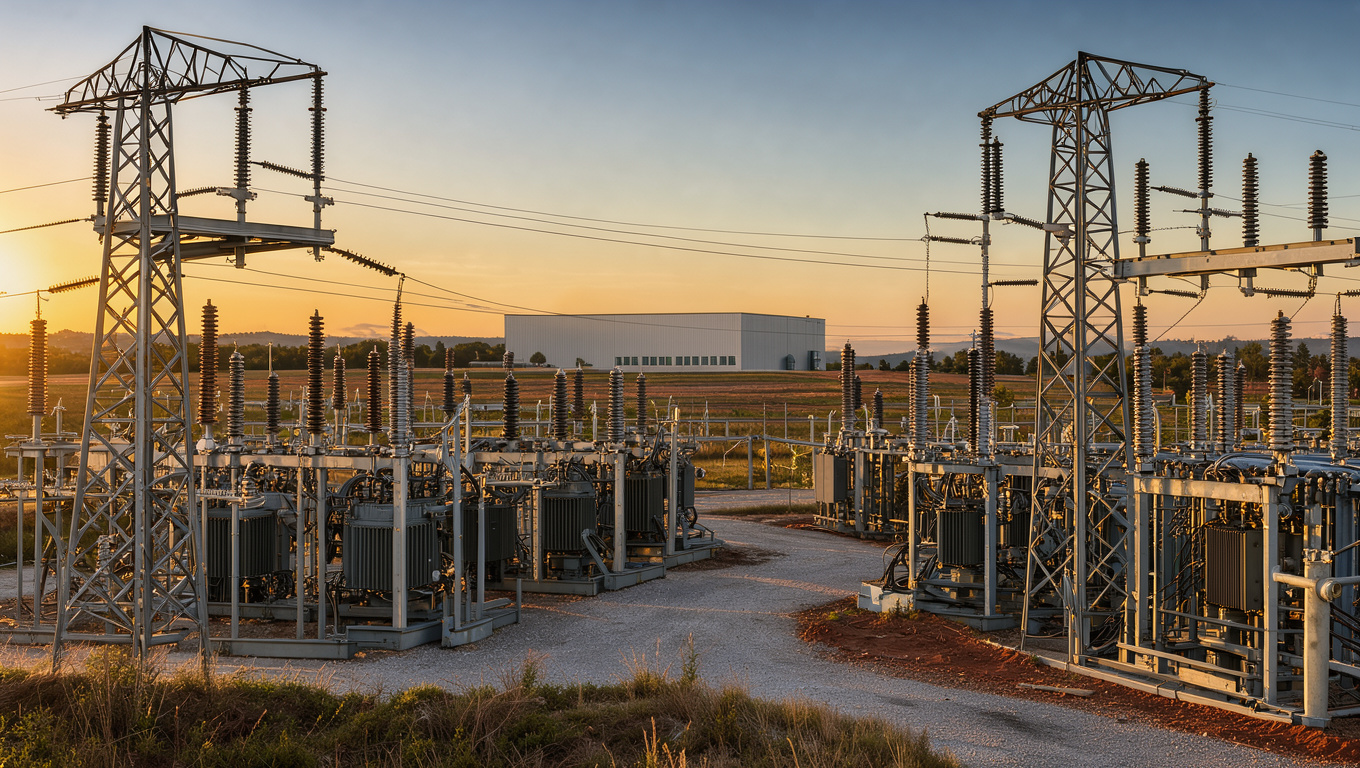
For data center in Italy, the large facilities that house servers for cloud computing and artificial intelligence, energy and location matter even before capital does. The Committee for Attracting Foreign Investment (CAIE) is supporting 88 projects, worth a total of more than €104.7 billion.1 Terna, the operator of the national power grid, has recorded more than 100 gigawatts (GW) of connection requests for new data centers. The government aims to spread out the sites and avoid concentrations that would worsen local pressures already in place.1
What do the CAIE figures say?
According to the snapshot updated to 29 October, the 88 projects come from 22 countries and 72 are still ongoing. The value indicates planned capital, not money already spent.1 The total includes initiatives of very different size and maturity. The component defined as “core”, meaning net of data centers and large programs, is worth €63 billion across 57 projects, according to the CAIE’s report released by Radiocor.1 Each initiative being followed may be at a different stage, from evaluation to the permitting process to construction. The announced figure therefore does not say how much has already been paid or how much capacity is actually in operation.1
Why is the power grid the real limit?
On 14 October 2026, Terna’s chief executive, Pasqualino Monti, said that grid connection applications for new data centers exceed 100 GW and come from almost 600 initiatives. In his view, the requests far exceed what the projects will actually be able to build.1 A data center requires high-capacity connections, cooling systems and uninterrupted power, with multi-year construction and high operating costs. The step from announcement to operating facility therefore depends on project maturity, permits and available energy.1
How does the government plan to proceed?
The CAIE meeting shows that the government wants to agree with the Regions on where to locate the facilities and to involve Italian companies in the supply chain: components, plant engineering, power grids, generators and cooling systems.1 For programs worth at least one billion euros, Decree-Law 25 of 2025 strengthened the coordination tools. The government can declare an investment of national strategic interest and, if needed, appoint a commissioner to coordinate the administrations. At the 29 October meeting, there were ten strategic programs, worth about €30 billion.1 The strategic program label makes coordination between administrations easier, but environmental authorizations, agreements with local authorities and the construction of grid works are still required.1
How much are the programs already declared strategic worth?
The press release of the Ministry of Enterprises and Made in Italy (MIMIT) of 1 July 2026 indicated nine active data center projects, worth more than €30 billion. By 4 August the Council of Ministers had declared seven data center programs of national strategic interest, worth more than €25 billion in total.1 The figures describe different scopes and should not be added together. The CAIE portfolio includes every project followed by the committee, while the seven strategic programs are only those that have received the government’s declaration. They are announced estimates, not money already spent.1 The K2 campus, in the Milan metropolitan area, is worth about €5.3 billion and can reach 400 MW. The Digital Vault Sulcis project is much smaller: an edge center for artificial intelligence of up to 30 MW, with renewable energy production and storage.1 For K2, MIMIT estimates about 2,000 work units per year over the four years of development and construction. At full operation it expects about 200 direct jobs and 1,300 in the permanent supply chain. For Digital Vault Sulcis it indicates about 400 jobs per year, including direct employment and the supply chain.1
A comparison with the United States
As a point of comparison, in the United States data centers have become an issue in the midterm elections. Among communities’ concerns is the fear that energy providers will pass the costs of grid upgrades and consumption peaks on to local residents and businesses.23
Sources
Footnotes
-
Boom dei data center: il governo punta a evitare la saturazione, AI4Business, 2026-11-04 ↩ ↩2 ↩3 ↩4 ↩5 ↩6 ↩7 ↩8 ↩9 ↩10 ↩11 ↩12 ↩13 ↩14
-
OpenAI says it will protect local resources and report on the impact of its data centers, Engadget, 2026-11-05 ↩
-
Data center AI, dalle midterm boom di misure restrittive negli USA, Key4biz, 2026-11-05 ↩