NASA Telescope Reenters: Swift Fell Over Sumatra
NASA's Swift space telescope reentered on November 4 over northern Sumatra. Here is what happened, what the risks were and why it was decommissioned.
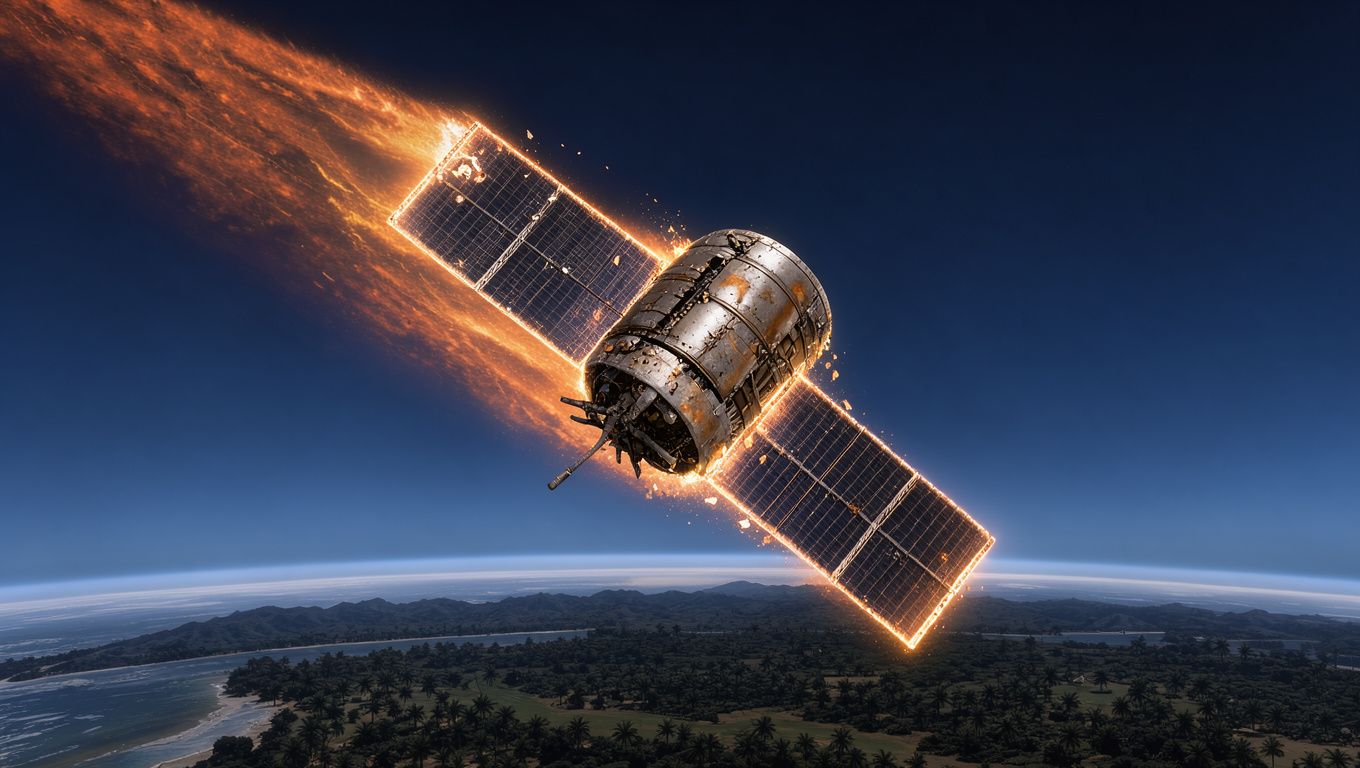
NASA’s Swift space telescope reentered the atmosphere on November 4 at 7:39 a.m. U.S. Eastern time (1239 GMT), over northern Sumatra.1 The time and location come from satellite-tracking expert Jonathan McDowell, who cites data from the U.S. Space Force. Two days earlier, Futurism had written that a decommissioned NASA telescope was falling and that experts did not know where it would come down.21
What “decommissioned” means for Swift
Here “decommissioned” means no longer operational. Swift made its last scientific observation on October 20, and the reentry was uncontrolled.1 The observatory was launched in November 2004 for a two-year mission devoted to gamma-ray bursts, the most powerful explosions in the universe. It kept working for about twenty years beyond its planned lifespan.1 The reentry comes three months after a private spacecraft attempted to lift it into a higher orbit and extend its life. That rescue attempt failed.1
What was the risk to people?
Swift weighed about 1,450 kilograms (3,200 pounds) and was about the size of a minibus. Before the fall, NASA officials expected most of the structure to break up from friction with the atmosphere.1 NASA estimated the chance that surviving fragments would injure someone on the ground at 1 in 2,100. According to Space, the fall most likely had no significant consequences.1
What was Swift for?
The telescope was meant to detect gamma-ray bursts, relay their position to other observatories and point its own instruments at the spot before the afterglow faded. S. Bradley Cenko, the mission’s principal investigator at NASA’s Goddard Space Flight Center, explained in a statement on October 23 that the operation typically took about a minute.1 Swift also studied distant supernovae, black holes feeding on matter, and asteroids and comets in the Solar System. In 2018 it was renamed the Neil Gehrels Swift Observatory. The name “Swift” is not an acronym and evokes the telescope’s agility in making observations.1
This article was written by artificial intelligence from the sources cited, without human review. Automatic newsroom by Redazia.