Plant-animal hybrid cell: Japan creates the first "planimals"
Japanese researchers fused an alga with animal cells to create "planimal" cells. What they achieved and what still needs to be proven.
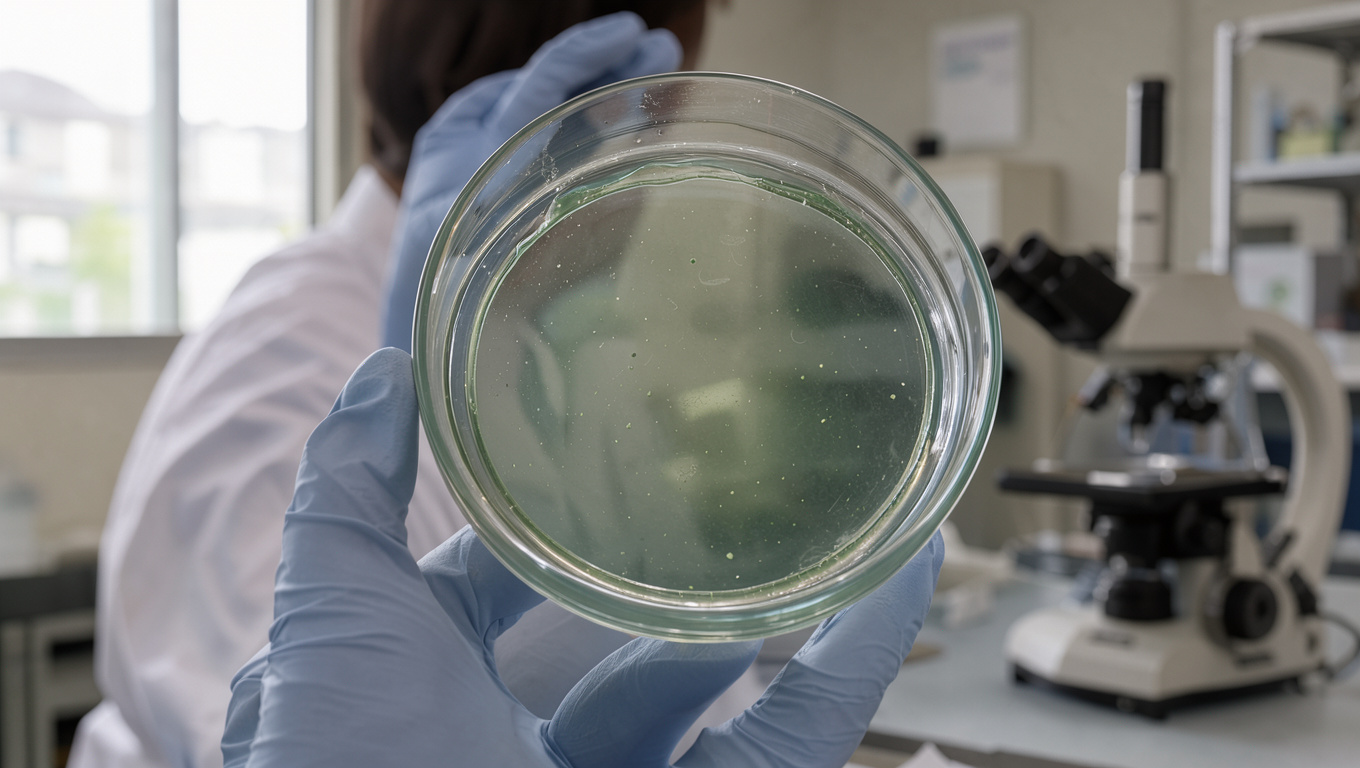
A Japanese group claims to be the first in the world to create plant-animal hybrid cells, named “planimals”. They obtained them by fusing the single-celled alga Cyanidioschyzon merolae with cultured animal cells, that is, cells grown in the laboratory.12 The team includes researchers from the University of Tokyo, the Institute of Science Tokyo and Kindai University, together with other collaborators. The results were published in the international journal Nature Communications.1
How the planimal cells were created
The starting animal cells come from Chinese hamster ovaries, used to produce drugs and other products. The alga is primitive and lacks a cell wall, and its genome is very small.1 To insert the alga’s DNA into the nucleus of the animal cell, the group used a conventional method based on polyethylene glycol. The success rate was low, but in some cells all of the alga’s DNA ended up in the animal chromosomes.1
Why the hybrid cells do not yet photosynthesize
Functionally, the hybrid cells remain animal cells. During fusion the alga’s DNA was silenced and the chloroplasts, the organelles that carry out photosynthesis, degraded.1 Silencing occurs through methylation, a mechanism that acts as an “off” switch on gene expression.1 Professor Sachihiro Matsunaga, of the Graduate School of Frontier Sciences at the University of Tokyo, says the group hopes to introduce chloroplasts and activate the alga’s genes, so as to generate oxygen through photosynthesis. Matsunaga has been working on planimal cells since 2018, when he proposed their creation.1
What remains to be demonstrated
The indicated application is the production of drugs and cultured meat. If cells producing useful animal and plant proteins could be grown in large quantities by exploiting photosynthesis, a new production route would open up.12 For now this is a hypothesis: in the cells obtained the alga’s genes are switched off and the chloroplasts are degraded, so photosynthesis has not been achieved.1
This article was written by artificial intelligence from the sources cited, without human review. Automatic newsroom by Redazia.