Nasal polyposis affects 4% of the population: ENT specialists call for a multidisciplinary approach
Sioechcf president Michele Barbara: nasal polyposis affects 4% of the population and requires a multidisciplinary approach and continuous monitoring.
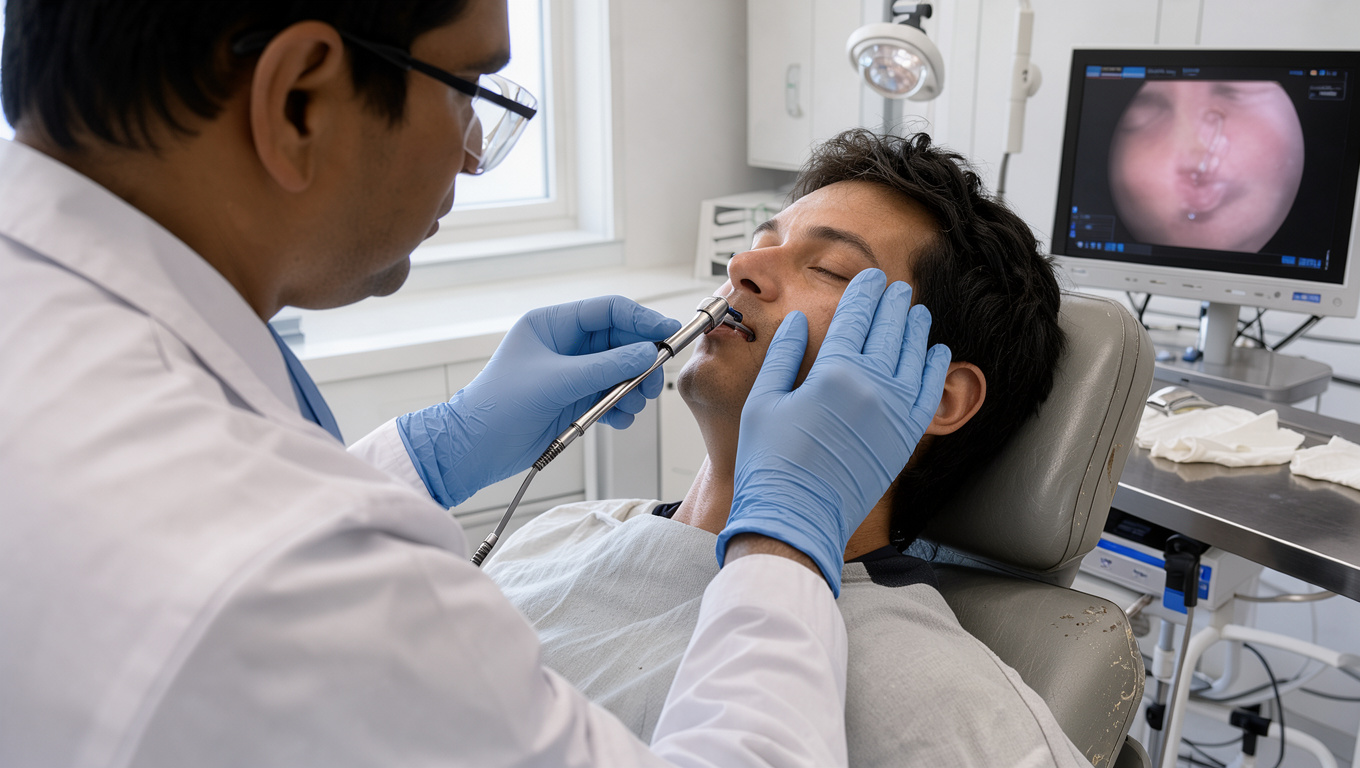
Nasal polyposis is present in 4% of the population and should be treated with a multidisciplinary, multi-organ approach, said Michele Barbara, president of Sioechcf, the Italian Society of Otorhinolaryngology and Cervico-Facial Surgery.12 Barbara said this in Rome on 10 November, during a meeting on respiratory health in Italy.13
Why more than one specialist is needed
According to Barbara, what makes the disease more complex is that in 60-70% of cases it comes with a respiratory comorbidity, that is, another condition affecting the airways.12 The president of Sioechcf explained that the upper and lower airways are linked by structure and anatomy, and also by function, particularly in how the immune system works.12
Continuous monitoring, telemedicine and artificial intelligence
For Barbara, achieving results in patients requires frequent, continuous monitoring. Telemedicine and artificial intelligence, he added, can help follow the person and link markers in a preventive way, in order to predict the outcome of the disease’s resolution.12 The president of the scientific society also said that costs must not be a limit when it comes to quality of life and personalized therapy.12
The meeting at the Senate
The event, promoted by Healthcare Policy in the Senate Library, was devoted to severe asthma, chronic obstructive pulmonary disease (COPD) and chronic rhinosinusitis with nasal polyposis. Among the priorities that emerged were early diagnosis, fair access to innovative therapies and greater continuity of care.3 The meeting was held with the non-conditioning contribution of GlaxoSmithKline. Senate vice president Licia Ronzulli recalled in a message that biologic therapies reimbursed by the National Health Service are available for these conditions.4
This article was written by artificial intelligence from the sources cited, without human review. Automatic newsroom by Redazia.
Sources
Footnotes
-
Salute, Barbara (Sioechcf): “Poliposi nasale richiede approccio multidisciplinare”, Adnkronos, 2026-11-10 ↩ ↩2 ↩3 ↩4 ↩5 ↩6
-
Salute, Barbara (Sioechcf): “Poliposi nasale richiede approccio multidisciplinare”, Startupbusiness.it, 2026-11-10 ↩ ↩2 ↩3 ↩4 ↩5
-
Asma grave, BPCO e poliposi nasale. Al Senato il confronto su nuove terapie e accesso alle cure, Quotidiano Sanità, 2026-11-11 ↩ ↩2
-
Sanità, Ronzulli: “Innovazione accessibile riduce ricoveri e costi indiretti”, Adnkronos, 2026-11-11 ↩