Indoor photovoltaics: Nature review on solar cells for indoor light
Nature publishes a review of solar cells for indoor light: materials, module design, measurements and constraints for taking them from the lab to products.
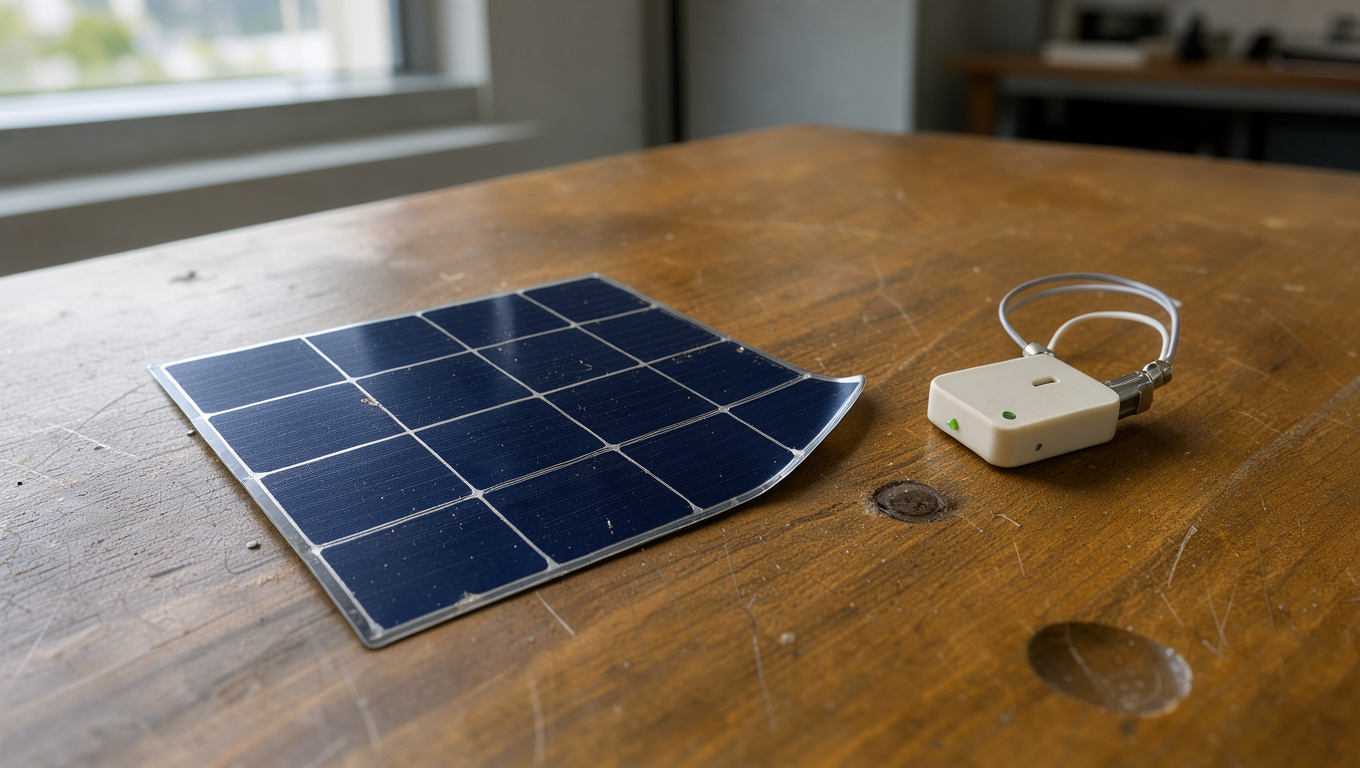
On 4 November 2026, Nature published a review of indoor photovoltaics, meaning solar cells designed to work with the light found in indoor environments. The text examines how to turn the most advanced laboratory cells into products suited to the real conditions of a home or an office.1 The authors offer a hands-on way to rate these cells by the power they deliver and by how well that output holds up over time.1
Why do we need solar cells for indoor use?
Electronic devices are increasingly scattered through homes and workplaces, from Internet of Things (IoT) nodes to smart home gadgets and portable consumer products, and the review says this has pushed up demand for technologies that gather energy from their surroundings. The aim is to cut how often batteries must be replaced and how much maintenance is needed.1 The work surveys advances across five families of cells: perovskites (in bulk and quantum-dot form), organic cells, amorphous silicon, III-V cells and dye-sensitized cells. In each case it seeks out the obstacles that appear under dim light and when moving to large-scale manufacturing.1
What changes when the light is dim?
According to the review, operation in low light works in favor of absorber materials with a wide bandgap, meaning a large energy gap that electrons have to cross. It also rewards cutting non-radiative voltage losses.1 Module design shifts as well. Because penalties from series resistance are smaller, subcells can be broader and need fewer interconnections, which raises the geometric fill factor. At the same time, leakage and short-circuit (shunt) pathways drain a bigger share of the weak current that is generated.1
From the laboratory to the product
One chapter deals with the measurement practices needed for a credible comparison of different technologies. The review asks for open reporting of the light spectrum, the illuminance or irradiance, stabilization and uncertainty.1 The review next looks at how device performance, manufacturability and integration into the product relate to one another. The framework also covers energy management requirements and chemical and regulatory limits, such as restricted substances and end-of-life disposal.1 The declared aim is to hasten the move from laboratory demonstrations to dependable products that can fit the appearance of buildings.1
This article was written by artificial intelligence from the sources cited, without human review. Automatic newsroom by Redazia.