AI and Work: Where Italy Stands Compared with Europe
Italy's Observatory presents dashboards and a Strategy on AI at work. A comparison with Germany and the UK on data, services and training.
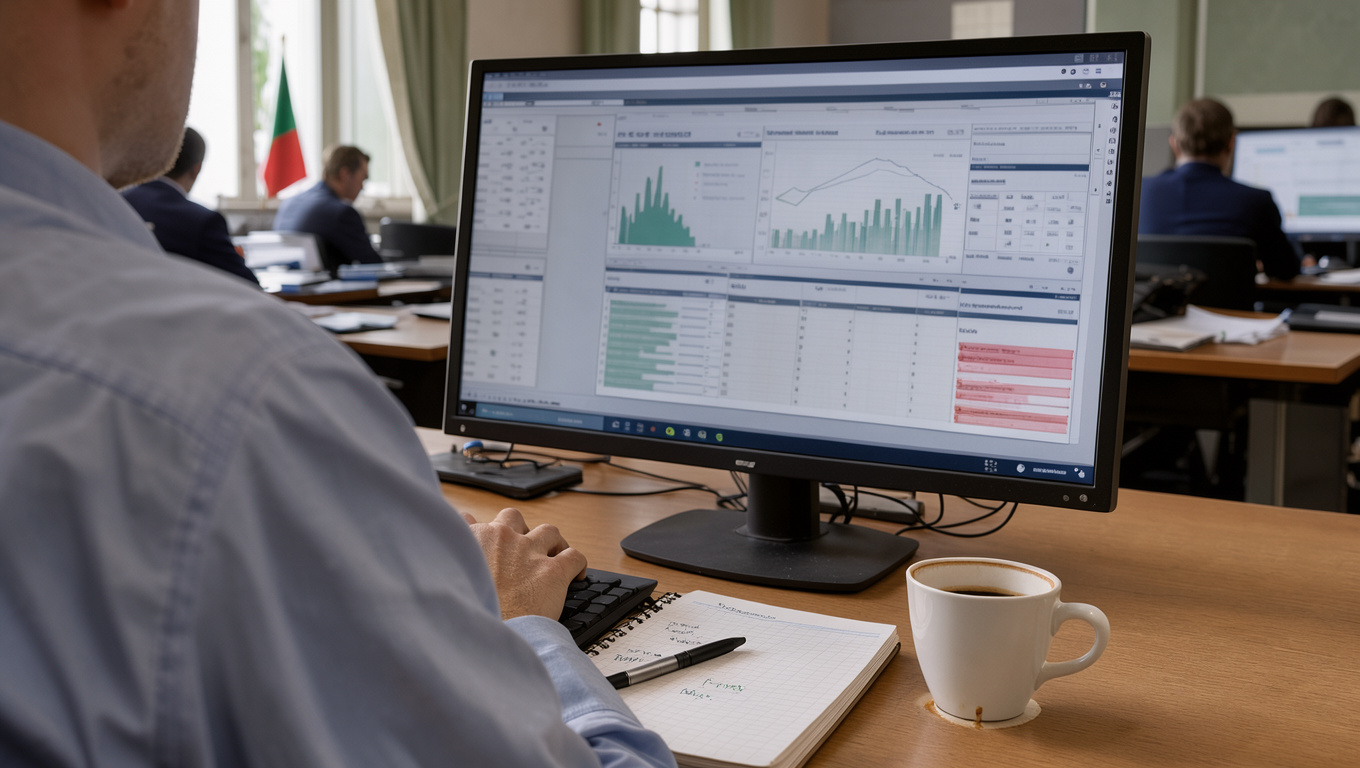
On AI and work, Italy has just presented its first measurement tools and at the end of November will bring the national Strategy to the Steering Committee. The comparison with Germany and the United Kingdom is mainly about data quality: how accessible the data are, how transparent the algorithms are, and whether the assessments manage to capture hiring, new skills and changes in small businesses.1
What the Italian Observatory presented
In Rome, at Palazzo Wedekind, on 5 November the Observatory on the adoption of artificial intelligence in the workplace outlined its Integrated Activity Plan. By the end of the month it will submit three texts to the Steering Committee, chaired by Labour Minister Marina Calderone: the Strategy on the use of AI at work, the annual Report on impacts and the updated Guidelines for businesses and workers. These documents will guide the Observatory’s activity for three years.1 The Observatory stems from the AI law passed in Italy as Law 132 of 2025, which devotes Article 12 to it. Ministerial Decree 173 then established it at the Ministry. The presentation showed the monitoring dashboards developed with INAPP (the National Institute for the Analysis of Public Policies) and with Sviluppo Lavoro Italia, the Ministry’s in-house company, the SIO platform for gathering knowledge, and the digital services the Ministry already makes available to citizens and businesses.1 The Steering Committee has 21 members, including ISTAT, INPS, INAPP, the National Labour Inspectorate, the Agency for Digital Italy, the National Cybersecurity Agency and CNEL. It is supported by four technical-scientific committees, including one on small businesses and self-employment, an Ethics Commission chaired by Paolo Benanti and a Consultative Body bringing together 29 employer and trade union organisations.1
How the impact of AI on occupations is measured
INAPP’s indicator breaks each occupation down into individual tasks and assesses to what extent AI could perform them in place of people or in support of them. It therefore gives a potential exposure and does not say how much AI is actually used. The new tools combine it with job advertisements, with available courses and, through Sviluppo Lavoro Italia, with hirings and terminations from the mandatory notifications.1 The first case cited is that of systems analysts. In 2025 in Italy there were 6,145 job advertisements for this profile, and 1,396 of them asked for at least one AI-related skill.1 SIO, the Observatory’s Intelligent System, already works in a basic version with a public chat, a tool for consultations conducted in dialogue form and a document archive. The first external consultation is planned for November, while in December a space reserved for experts will open. In the long term the aim is to build a digital model of the Italian labour market to compare different scenarios.1
What Germany and the United Kingdom are doing
In Germany the KI-Observatorium has operated since 2020 within the Federal Ministry of Labour’s lab. The compendium of good practices that the ILO (International Labour Organization) and the OECD drew up for the G7 describes it as a service that gives businesses voluntary guidance, training materials and software for human oversight of systems. In September 2026 the ministry launched a research call on the productive use of AI.1 The measurement of occupational exposure is handled by the IAB, the research institute of the federal employment agency, with the Job-Futuromat, relaunched in 2026. The tool indicates, for each trade, how many tasks would be technically automatable, with the state of the technology frozen at 2022, and anyone can consult it. For the regions and occupations most exposed, German researchers expect first of all a need to train people and to adopt targeted economic measures, rather than a loss of jobs.1 In the United Kingdom the government set up in January 2026 a unit involving several ministries on AI and the future of work. It works on three fronts: research, policy analysis and coordination between departments.1 The British government has also established the AI Economics Institute, which it describes as the first institute of its kind backed by a government. It is a research organisation shared by the Treasury and the Department for Science, Innovation and Technology (DSIT). It will have to build data infrastructure and measurement methods and develop models and scenarios on productivity, the labour market and growth.2 The institute does not set policy, which remains the responsibility of the ministries: its purpose is to make the analyses on which those decisions are based more robust and timely. It will commission research from external bodies, publish some analyses and absorbs DSIT’s Future of Work Unit. It is chaired by Simon Johnson, a Nobel Prize-winning economist.2
What changes
The Italian approach rests on a law, on the formal involvement of the social partners and on the use of public administrative data.1 Both the INAPP indicator and the Job-Futuromat measure what AI could do, not what businesses are doing.1 For small businesses, the subject of a dedicated committee in Italy, the conditions indicated are accessible data, transparent algorithms and assessments able to detect real changes.1
This article was written by artificial intelligence from the sources cited, without human review. Automatic newsroom by Redazia.