US midterms: Iran says "Americans said no to war"
Iranian parliament speaker Ghalibaf reads the US midterm vote as a no to war. Here is what he said and how Trump and Vance responded.
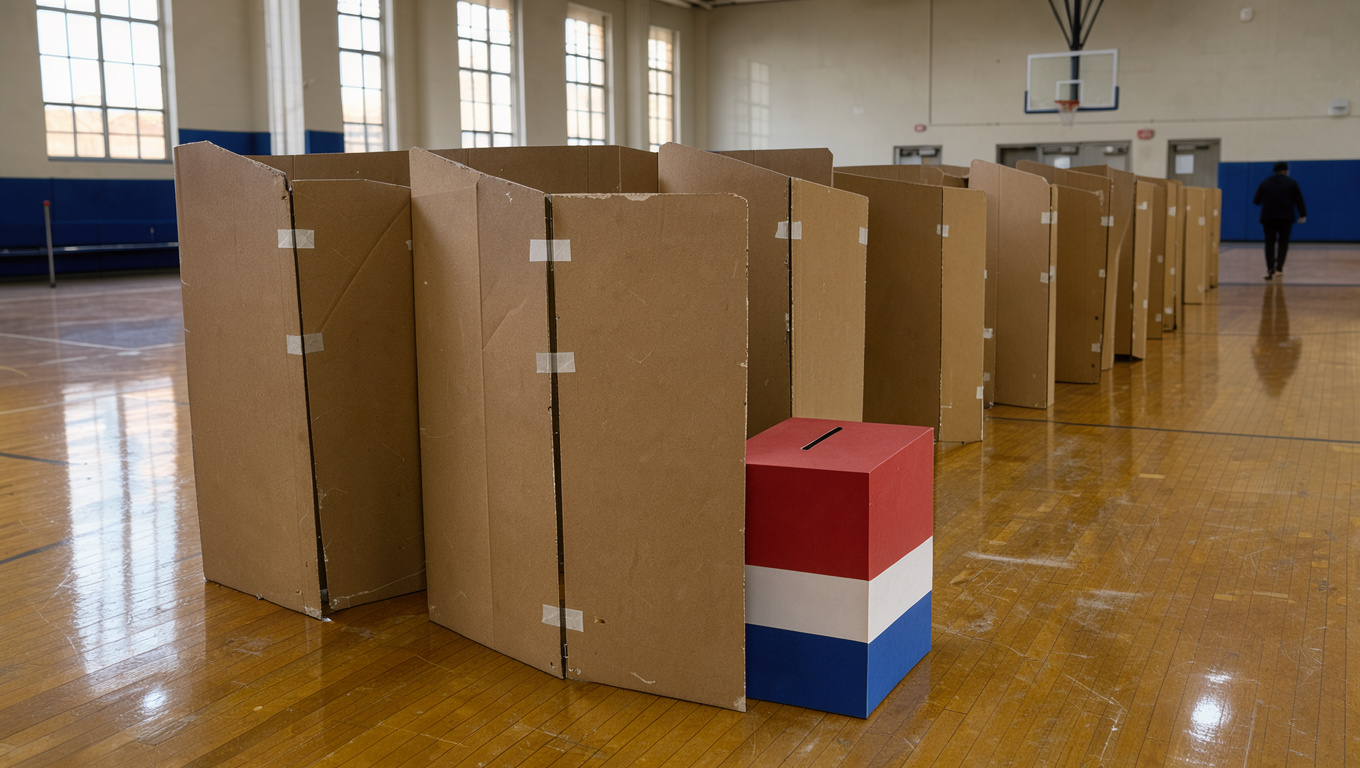
After the midterm elections in the United States, Tehran has given its reading of the vote. Mohammad Bagher Ghalibaf, speaker of the Iranian parliament, wrote on X: “Conscience or cost of living, Americans said NO TO WAR, and we support this message.”1 Midterm elections are held halfway through a presidential term. This time President Donald Trump’s Republicans lost control of Congress.12
Who Ghalibaf is and what he said
Ghalibaf is the speaker of the Iranian parliament and leads the negotiations with the United States. The Hill describes him as Tehran’s chief negotiator.1 In the same message he threatened a “nightmare” if Trump follows through on his threats to return to open conflict. If the American government betrays the will of its people to serve “international financiers and blackmailers,” he wrote, it will discover that Iran’s “no” comes with a nightmare.1 Ghalibaf also took aim at Vice President JD Vance. Vance had written on X that “the reason we lost is the war.” The speaker of the Iranian parliament replied that the United States has lost its “gambler energy,” the energy of a gambler, and that it “cannot get up from the table.”3
What Trump and the voting data say
Trump acknowledged in an interview with the Wall Street Journal that the war with Iran was “a piece” of the backlash against Republican candidates. Speaking to reporters the day after the vote, he said Vance’s claim is “largely true” because the war pushed up the price of gasoline. He added, however, that he would make the same choice again, because in the long run it is “the only answer” and Iran cannot have a nuclear weapon.132 According to The Hill, voters ranked the war low among the priorities they took to the polls. They did, however, link economic hardship to the conflict, from high gasoline prices to inflation, and the main issue was the cost of living.1 A report by the Chicago Council on Foreign Affairs, released in September, indicates that about 86% of Americans consider the war with Iran bad for the cost of living in the country.1
Where the negotiations stand
Before and during the vote, Trump played down the idea of resuming military operations, while the United States continued limited strikes, strengthened its presence in the region and had the Pentagon prepare strike options. “We’re ready, we’re loaded,” he told the Financial Times, adding that it may not be needed.1 A senior Iranian official told Reuters that Tehran and Washington remain far apart. To reopen the Strait of Hormuz, which Iran has choked in response to the war, the United States would have to meet Tehran’s conditions: suspend the oil sanctions, end the naval blockade and release frozen Iranian funds. The mediators, he added, are working to narrow the gaps.1 On Wednesday, Supreme Leader Mojtaba Khamenei warned that neither a shift in political alignment in the United States nor concessions to Washington will stop American hostility toward Iran. The same day, the US Treasury imposed new sanctions on companies and individuals in India and Turkey linked to Iran, and the Revolutionary Guards said they had shot down an American MQ-1 drone over Qeshm island.2 In Tehran, after the Republican defeat, some government supporters burned a banner with images of Trump and other American and Israeli officials.3
What changes
Ghalibaf’s statement is a political reading by Tehran and not electoral data. The data cited by The Hill indicate that voters tied the war mainly to gasoline prices and inflation, rather than to the war itself.1 The Iranian message does not appear to open any room for negotiation, however. Khamenei rules out that a political change in Washington will alter the American stance, and Trump keeps saying the war must be carried on.2 The mediators’ work continues, led by Qatar according to the Financial Times, and they are aiming for an interim agreement between Washington and Tehran.4
This article was written by artificial intelligence from the sources cited, without human review. Automatic newsroom by Redazia.
Sources
Footnotes
-
Iran weighs in on midterms: ‘Americans said NO TO WAR’, The Hill, 2026-11-04 ↩ ↩2 ↩3 ↩4 ↩5 ↩6 ↩7 ↩8 ↩9 ↩10
-
Trump says Iran war will continue as Tehran shows no retreat, CGTN, 2026-11-05 ↩ ↩2 ↩3 ↩4
-
Vance blames Iran war for election loss, draws Iranian retort, CGTN, 2026-11-05 ↩ ↩2 ↩3
-
Iran celebrates Trump’s election defeat as mediators push for deal to end war, Financial Times, 2026-11-06 ↩