Myanmar's Economy: Why Trade and Investment Are Struggling
Min Aung Hlaing seeks investment from China, Thailand and Malaysia, but licences, foreign currency and conflict are slowing deals. What the data shows.
Myanmar’s economy is struggling to benefit from the trade diplomacy launched by President Min Aung Hlaing. According to an analysis by The Diplomat, ongoing conflicts and domestic economic restrictions are hindering the search for foreign investment and trade with neighbouring countries.1 Min Aung Hlaing, a former head of the military junta, is now president following the elections of December 2025 and January 2026, which the magazine described as highly controversial. Since then, he has visited neighbouring countries, bringing with him representatives of the country’s main business groups.1
What Naypyidaw Has Promised Its Neighbours
In China, from 15 to 19 June, Min Aung Hlaing and Xi Jinping agreed to accelerate projects under the China-Myanmar economic corridor and to increase trade with payments settled in yuan and kyat.1 In Thailand, on 6 and 7 August, Min Aung Hlaing held talks with Prime Minister Anutin Charnvirakul and set a bilateral trade target of 12 billion dollars, though no deadline was given. The two sides also committed to loosening red tape and easing cross-border trade.1 At the economic dialogue in Kuala Lumpur on 7 October, he called on Malaysian businesses to invest in Myanmar, focusing on food processing and manufacturing, logistics, and special economic zones.1
Why Domestic Restrictions Are Slowing the Deals
Carrying out these projects requires companies to have foreign currency to import machinery and raw materials. The regime, however, tightly regulates imports and exchange rates and maintains limits on purchases from abroad to protect foreign exchange reserves that have now shrunk.1 The guide from the US Department of Commerce explains that, since April 2021, the military has introduced a series of import restrictions to conserve currency and stimulate domestic production. More than a third of imported products are subject to some kind of constraint, in a model oriented towards import substitution.2 Import licence applications receive limited approvals and response times are unpredictable, importers report. Since June 2023, requests for river, land and border trade have only been processed through the non-automatic licensing system, with the obligation to document export earnings.2 The fall in exports reduces foreign currency earnings, and payments to suppliers can only be made through official channels. For this reason, some operators resort to hundi, an illegal financial network operating outside the banks.2
How Much a Weak Economy and Conflict Weigh
The World Bank report of June 2026 estimates a 2% contraction for Myanmar compared with the previous fiscal year and inflation at 24.6% in April 2026. According to the analysis, the picture also reflects the burdensome administrative load and the uneven enforcement of policies.1 Some activities are stabilising, but many companies face electricity shortages, weak demand and rising production costs, amid the conflict and the effects of the 2025 earthquake. In these conditions, notes The Diplomat, businesses are thinking more about surviving than expanding, and the context for foreign investors remains difficult.1
What Is Happening at the Borders
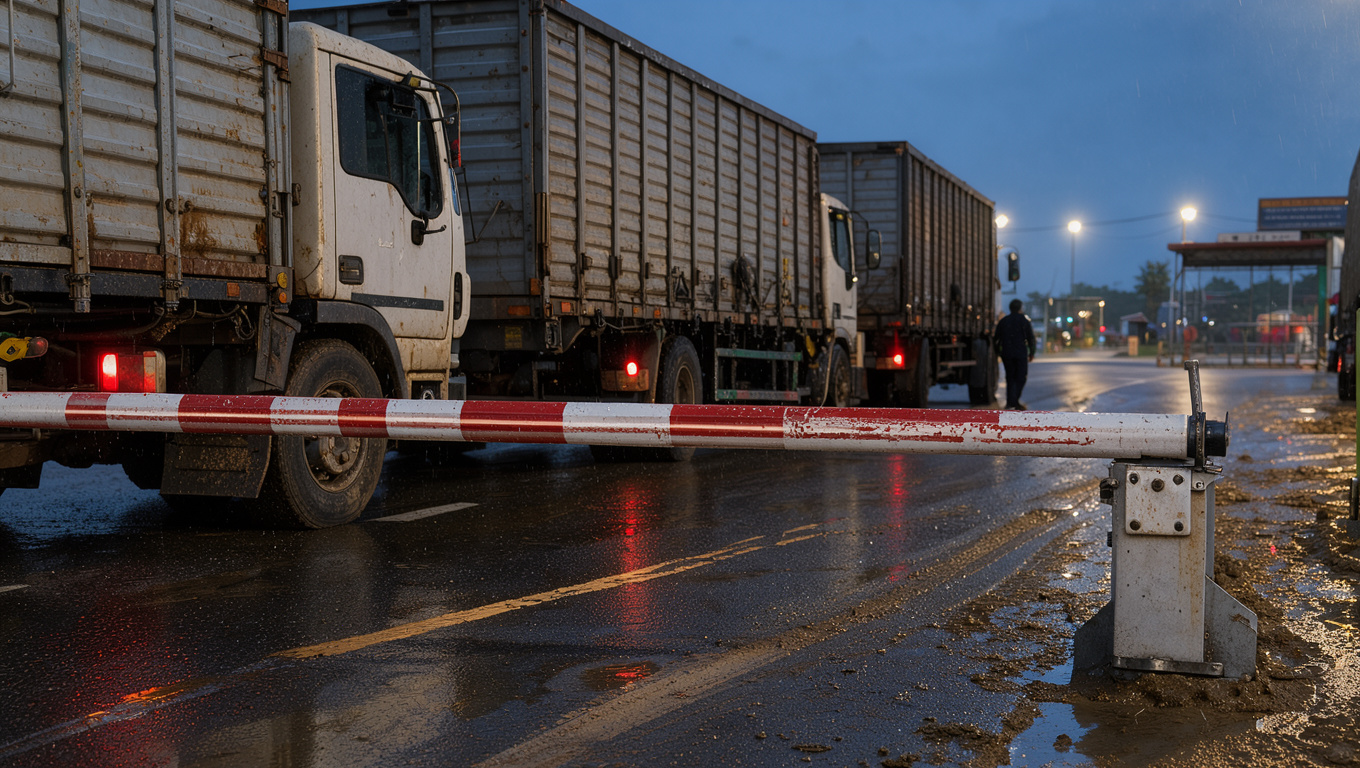
On 21 September, shortly after the visit to Thailand, authorities blocked loads of frozen food and other goods at the Tachilek-Mae Sai border crossing. The reason given, according to reports, was standards checks and unpaid taxes. The result was congested traffic and goods piling up at the border.1 Trade with China is also under tight control at the border. Beijing has eased restrictions at some crossings controlled by ethnic armed organisations, but goods struggle to reach domestic markets. Since August, the army and joint ministry teams have tightened controls, hindering informal flows.1 The political motives are clear according to The Diplomat: after Operation 1027, the offensive launched at the end of 2023 by the main ethnic armed groups, most trade routes and facilities along the Chinese border have come under their control.1 The analysis links these restrictions to the interests of a small coalition of political authorities and business elites who control access to trade and investment. They therefore have reason to maintain limits on imports, currency and trade revenues.1
What Changes
The blockade of Tachilek-Mae Sai, which came just weeks after the visit to Bangkok, shows how decisions on the ground can contradict promises. The Diplomat concludes that, unless these contradictions are resolved, economic diplomacy is unlikely to lead to national recovery.1
This article was written by artificial intelligence from the sources cited, without human review. Automatic newsroom by Redazia.