Why data centers are at the center of the protest against Big Tech, according to Paris Marx
Paris Marx's book "Hyperscale" explains why data centers are at the center of protests against Big Tech: water, electricity, noise and local communities.
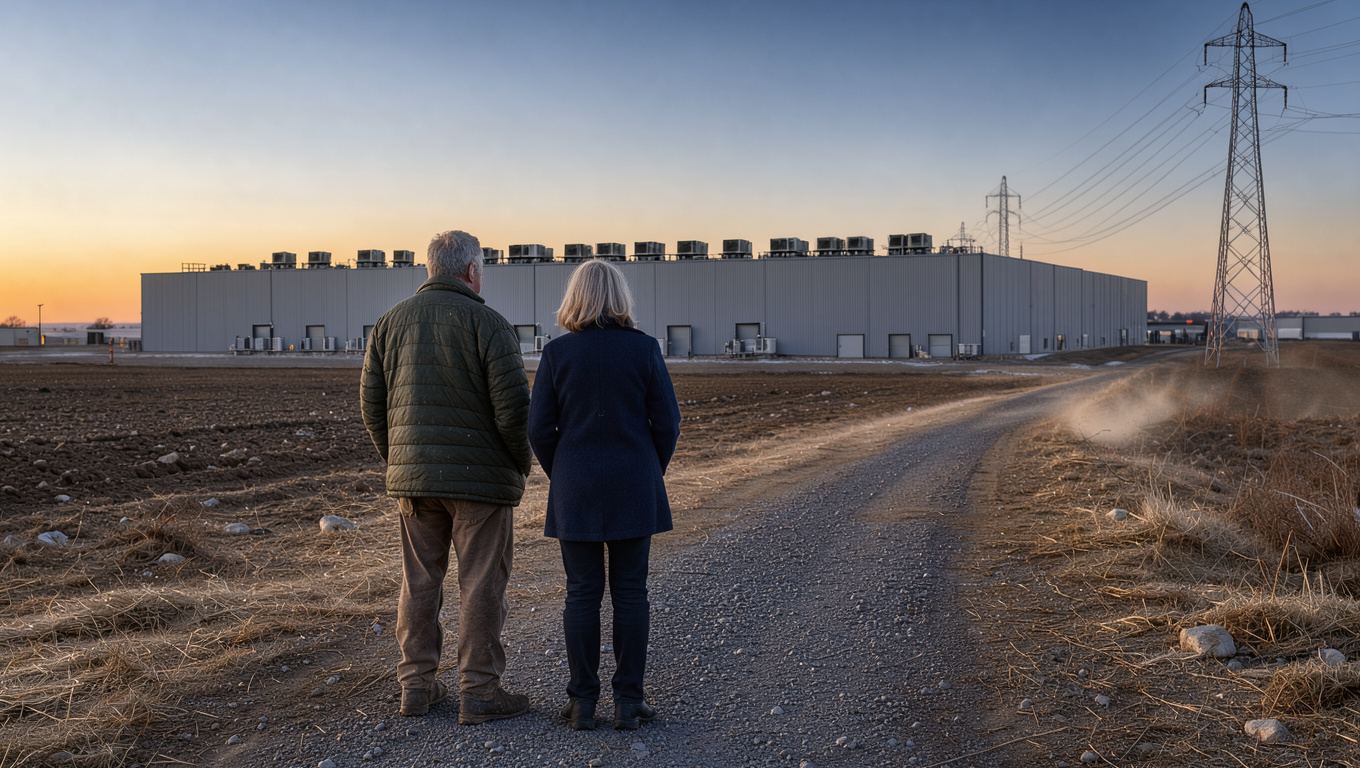
Facilities full of servers that keep digital services running have become a lightning rod in politics, because they are tangible: they take up space and weigh on power bills, water supplies and noise levels. Journalist Paris Marx makes this case in his latest book, “Hyperscale”, which examines what data centers and generative artificial intelligence are doing to the places where they are built.1 In an interview with TechCrunch, Marx called the push to build new facilities deeply untenable and totally incompatible with a habitable planet.1
What data centers are and why they are in the news
A data center is a structure with servers dedicated to storing and processing data, on which everyday services such as online banking, hospitals, public transport and streaming depend.2 According to TechCrunch, discontent with data centers appears to have been one of the factors behind the wave of votes for the Democrats in the recent midterm elections, and the issue is expected to remain in the debate now that the party has more governing power.1 For Marx, people who live near a facility feel its effects regardless of their political leanings: on quality of life, on the electricity bill, possibly on access to water and on the noise of air conditioners installed on rooftops.1
What the inside of a data center is really like
Marx says that entering a large data center is difficult. Before today’s focus on generative AI, some researchers told him, it was easier. He wrote to several companies, often receiving silence or a refusal, and visited the outside of facilities in northern Virginia and in Ireland. In the end he went to New Zealand to see one from the inside.1 The detail that struck him most is security. He had to send his passport in advance, which was checked on arrival, and every door stayed locked without a badge.1 The server room, he says, has nothing sinister about it: it is a practical, hot environment, with air conditioning blowing over the servers. The fans make a piercing noise, so much so that you would need earplugs to stay there for long.1
The cases that pushed Marx to write the book
Marx points to three stories that convinced him to explore the topic. The first concerns Santiago, Chile, where companies such as Google and Microsoft were building data centers and communities, worried about water, began to organize.1 The second is Ireland, where according to Marx data centers now consume more than 20% of the country’s electricity, with effects on prices and on the grid. In 2022 the grid operator suspended new connections for data centers in the Dublin area, even before the surge of construction linked to generative AI.1 A figure from Euronews points in the same direction: in 2025 in Ireland, data centers accounted for 23% of electricity measured by meters, compared with 5% in 2015.2 The third story is that of The Dalles, Oregon, where Google built its first data centers that it owned roughly twenty years ago. When the water agreement was about to expire and the company wanted to expand, residents asked how much water it was using. According to Marx’s account, a journalist from The Oregonian who asked the city for the figures received a lawsuit instead of data, because Google did not want to make them public.1
A protest that goes beyond data centers
Marx argues that opposition to data centers is only the most visible part of a movement against “the physical manifestations of the tech industry”. Among other examples, he cites the Flock cameras deployed across the United States, the smart glasses that Meta wants to put on people’s faces, and Waymo’s self-driving cars.1 In the interview, TechCrunch and Marx also discuss environmental impact and how technology companies respond to community resistance.1
What changes
Euronews adds that data centers consume large amounts of electricity, water and land and that, if the energy is not low-carbon, their expansion can increase emissions.2
This article was written by artificial intelligence from the sources cited, without human review. Automatic newsroom by Redazia.