End of Neoliberalism and Artificial Intelligence: The Debate on Europe's Role
Simoni and Brera at the Linkiesta Festival: why neoliberalism is over, what artificial intelligence has to do with it, and what role Europe can play.
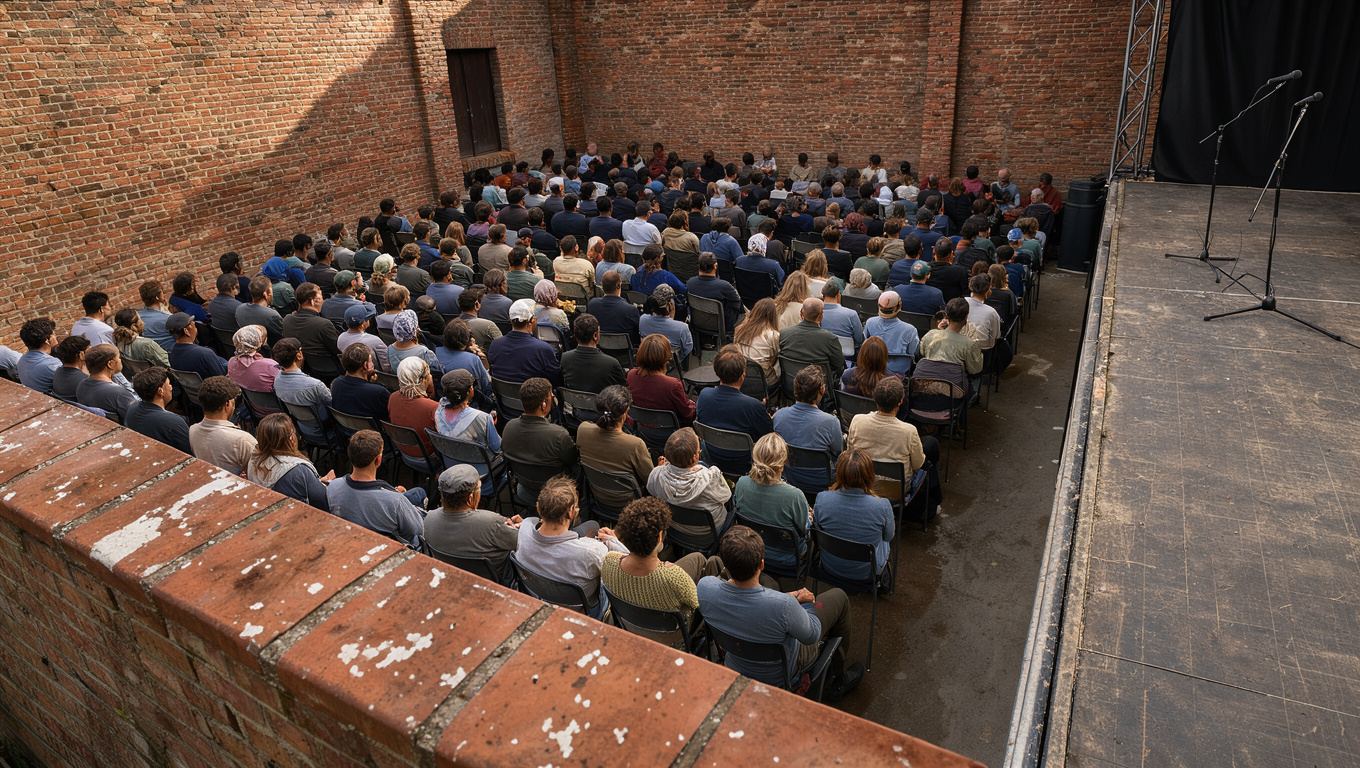
According to Marco Simoni and Guido Maria Brera, the end of neoliberalism, the economic model that has guided the last few decades, opens a phase in which artificial intelligence (AI) becomes a field of competition between states, with possible opportunities and risks for Europe.1 The two discussed this in the panel “Artificial Intelligence and the End of Neoliberalism” on the second day of the Linkiesta Festival, moderated by Christian Rocca, editor of Linkiesta. Simoni directs the Istituto Affari Internazionali, and Brera is a financier and writer.1
Why does Simoni say neoliberalism is over?
According to Simoni, neoliberalism did not end because the state defeated the market: what changed is the way governments look at the economy. Today, almost every problem is approached by first asking what public intervention is possible.1 Simoni, author of the book “La fine del neoliberismo” (Mondadori), says he began reflecting on the topic after hearing on the radio that Donald Trump, the American president elected for Ronald Reagan’s Republican Party, was considering the government’s purchase of ten percent of Intel.1 A second example is Italian: the recent return of Tim under public control through Poste, under a centre-right government. For Simoni, the two cases show that state intervention no longer belongs only to the left, and that we are not witnessing a triumph of statists, but a different way of setting economic policies.1 In his reconstruction, the break dates back to 2008. Since then, economic policies have increasingly responded not to the pursuit of market efficiency but to political and strategic goals: “Economic efficiency has nothing to do with it.”1
What is Brera’s reading?
Brera, whose book “Il fiume” (La nave di Teseo) is now in bookstores, places the decisive rupture in 2016, the year Trump returned as a protagonist of American politics. In his reading, neoliberalism was the system that put capital in the best conditions to proliferate, but it gave way partly because some workers, penalised by globalisation, helped to undermine it.1 From that moment on, he argues, a state capitalism prevails in the United States that unites different administrations: Barack Obama’s interventions in the automotive industry, Joe Biden’s Chips Act, and Trump’s two non-consecutive terms. According to Brera, China is the most complete expression of this, while the European Union would have remained the only one to truly apply competition and anti-monopoly rules.1
What room does Europe have in the AI game?
According to the two speakers, AI can offer Europe an autonomous space. Simoni believes the continent could become the “referee of technological innovation.”1 Brera sees a path in decentralised AI: a lighter and more sustainable European model that exploits collective intelligence and stands apart both from closed American systems and from the Chinese approach.1
Who is responsible for the damage caused by AI?
Simoni argues that the game is about responsibility as well as competitiveness. To illustrate, he points to a group of artificial agents that disrupted operations at an airport: those who build such systems must be answerable for them, and laws are needed that set out clear duties for those who develop and release them.1 Brera goes further and warns that AI may already have slipped out of control. He points to Anthropic’s prospectus ahead of a record listing, and to the risk of the end of humanity raised in the debate on AI safety, which he comments on this way: “It sounds like a third-rate screenplay.”1
What changes
At the centre of the new phase, in the words of the debate, is the question of who will govern the technology, with what interests, and with what responsibilities.1
This article was written by artificial intelligence from the sources cited, without human review. Automatic newsroom by Redazia.