Heat Pumps Could Cut a Quarter of EU Energy Emissions
EHPA analysis: heat pumps in every building, powered by renewables, could avoid 600 million tonnes of CO2. How they work and how many are installed.
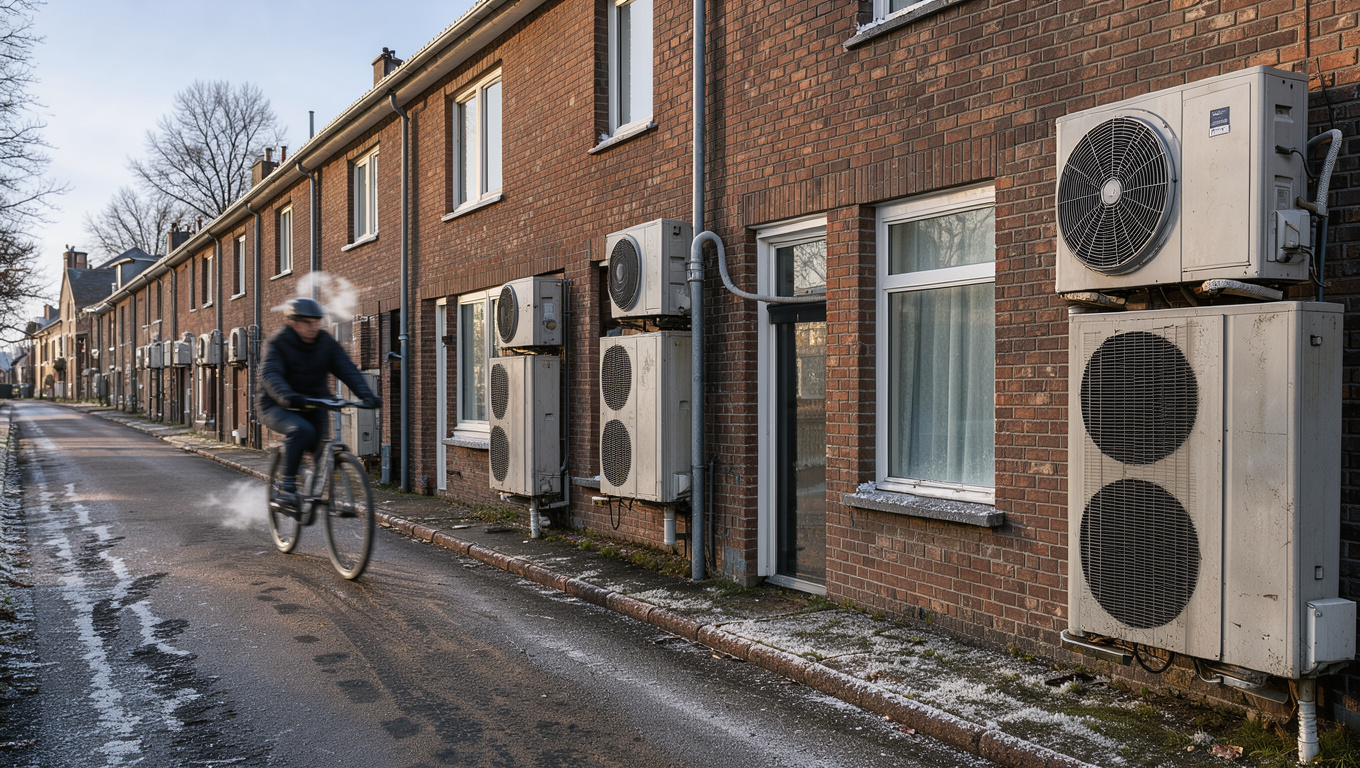
Heat pumps could reduce the European Union’s energy emissions by a quarter. This is what a new analysis by the European Heat Pump Association (EHPA), the sector’s European association, reported by Euronews, claims.1 The calculation assumes heat pumps in every building and in every compatible industrial process, powered by renewable sources such as solar and wind. In that case, about 600 million tonnes (Mt) of CO2 would be avoided.1 This figure exceeds the annual emissions of Germany, the bloc’s largest economy, or those of the 17 smallest EU countries combined.1
How a Heat Pump Works
Depending on the type, a heat pump draws energy from air, water or ground and turns it into heat or cold, without burning fossil fuels in the building.1 The principle is that of a refrigerator in reverse: a liquid is compressed, becomes hot gas and releases heat into the heating system. It then cools, turns back into liquid, and the cycle starts again.1 For every kilowatt-hour (kWh) of electricity consumed, it typically produces three or four kWh of heat.1
How Widespread They Are Today
According to the EHPA, each residential heat pump replaces on average about 1,100 cubic metres of gas and two tonnes of CO2 per year, if the small amount of electricity it uses comes from renewable sources.1 Europe already has around 30 million residential units, and in 2025 about three million were added. That is one million fewer than the target of four million set by the European Commission.1 Euronews notes that the technology is surrounded by misinformation about its performance in cold weather, its noise and its installation in old buildings.1
What the EHPA Is Asking For
Director General Paul Kenny calls on governments to make installation easier in every building and in low-temperature industry. What is needed, he says, is initial support for costs, affordable clean electricity and smooth grid connections.1 Kenny states that heat pumps “are already reducing emissions” and protecting against fossil fuel price shocks.1
What Changes
The study comes from the association representing the sector, the same one calling for support and faster grid connections.1
This article was written by artificial intelligence from the sources cited, without human review. Automatic newsroom by Redazia.