Big Bend border wall: US Supreme Court clears the way
The US Supreme Court lifted the halt on border wall construction in Big Bend, Texas. What the ruling says and what the contested waivers are.
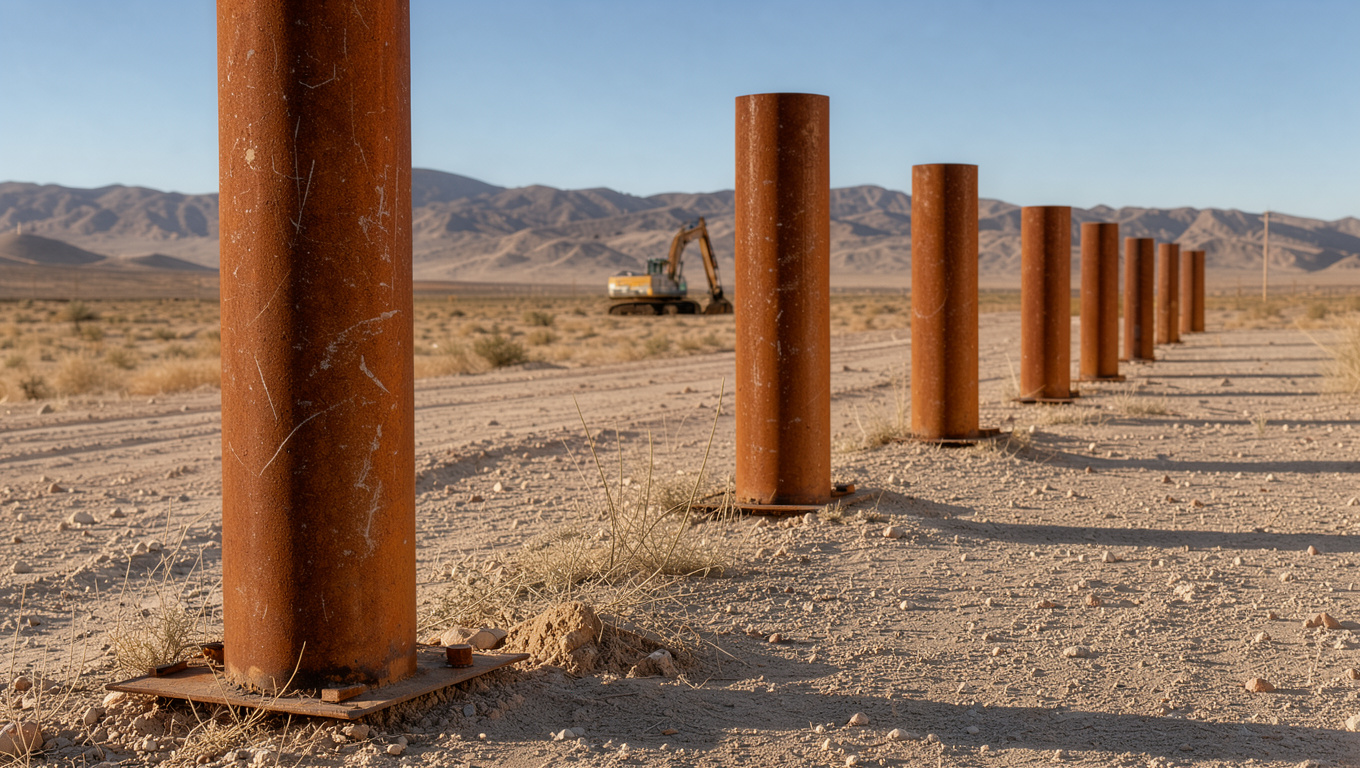
The US Supreme Court has allowed the Trump administration to continue building barriers on the border with Mexico in the Big Bend area of Texas, which includes Big Bend National Park. It ruled on Monday, November 9, granting an emergency request from the government.123 The Court set aside the order by which a federal judge had halted the work last month. The lawsuit against the project, brought by an environmental group and other plaintiffs, remains open.12
What the Court decided
The decision is an unsigned five-page ruling. In its reasoning, the justices write that the government’s interest “outweighs any aesthetic, recreational and environmental harm” claimed by the plaintiffs.134 The Court added that the law in question probably precludes judicial review of the claims raised in the lawsuit. According to the Guardian, the text states that the law passed by Congress reflects a preference for border control over environmental and recreational harms.13 Among the nine justices, who have a 6-3 conservative majority, the liberal Ketanji Brown Jackson was the only one to publicly dissent.1 According to Le Monde, work at the site in the park can now resume at any moment.5
What the contested waivers are
The lawsuit challenges a series of waivers issued by the Department of Homeland Security. They serve to speed up the construction of roads and barriers by avoiding the application of various environmental and land protection laws. They were signed between February and July by Secretary Markwayne Mullin and his predecessor Kristi Noem, under a 1996 federal law designed to facilitate barriers in areas of high illegal immigration.16 Mullin and Noem described the region as an “area of high illegal entry.” The administration also claims that border authorities in the area have seized large quantities of drugs and that the cartels operate to the south, in Mexican territory.1 The plaintiffs say that without the waivers, the project would have to comply with laws such as the Endangered Species Act, the National Environmental Policy Act (environmental review) and the National Historic Preservation Act (historic sites). They further argue that the two secretaries overstepped their authority, among other things by breaching the “major questions” doctrine, which the Court has used to strike down executive actions of “enormous economic and political importance” that Congress had not clearly authorized.17
Why the El Paso judge had halted the work
In October, Kathleen Cardone, the federal district judge in El Paso, had put the project on hold. In her view, Congress had never clearly authorized the waivers, and they also contravened the major questions doctrine; she noted that no other stretch of the border comes close to Big Bend’s low rate of migrant arrests.17 She argued that if the Big Bend sector counts as a zone with heavy illegal crossings, every other sector would too, which would let the waiver power reach the whole border. The Department of Justice told the Court that the judge’s ruling had no basis.7
What is planned in Big Bend
According to the administration, most of the work in the Big Bend sector, which stretches over 480 kilometers, will involve private land. Inside the park, a 27-kilometer, non-continuous system of vehicle barriers would be built, rather than the 9-meter-high pedestrian wall planned elsewhere.17 The plaintiffs are the Center for Biological Diversity, a local river guide and a group that wants to preserve a historic church in Ruidosa, Texas, whose fragile adobe structure would be threatened by the work. The park is about 400 kilometers southeast of El Paso.17 In August, the administration had suspended construction in Big Bend after bipartisan criticism over the impact on the landscape and wildlife. Crews had already begun clearing land in the park, amid protests and legal challenges.17 Laiken Jordahl of the Center for Biological Diversity called the decision “horrible” and said it allows contractors to build before the courts have even determined whether the work is legal.17
This article was written by artificial intelligence from the sources cited, without human review. Automatic newsroom by Redazia.
Sources
Footnotes
-
Supreme Court allows Trump border wall at Big Bend National Park in Texas, The Straits Times · World, 2026-11-09 ↩ ↩2 ↩3 ↩4 ↩5 ↩6 ↩7 ↩8 ↩9 ↩10 ↩11 ↩12 ↩13
-
Supreme Court allows Big Bend border construction to continue in Texas, siding with Trump, The Hill, 2026-11-09 ↩ ↩2
-
US supreme court clears way for Trump’s border wall in Texas’s Big Bend, The Guardian · World, 2026-11-09 ↩ ↩2 ↩3
-
Supreme Court lets Trump build border wall through Texas national park, Financial Times, 2026-11-09 ↩
-
La Cour suprême américaine autorise la reprise de travaux de l’administration Trump à la frontière avec le Mexique dans un parc national au Texas, Le Monde, 2026-11-10 ↩
-
US Supreme Court allows border wall in Big Bend National Park to proceed, Al Jazeera, 2026-11-09 ↩
-
US Supreme Court allows Trump border wall at Big Bend National Park in Texas, The Straits Times · World, 2026-11-09 ↩ ↩2 ↩3 ↩4 ↩5 ↩6 ↩7