"Il fiume" by Brera: the novel on AI, data centers and data
Guido Maria Brera's novel "Il fiume" puts a young woman and a financier at dinner: data centers, Tiber water and personal data control in the AI era.
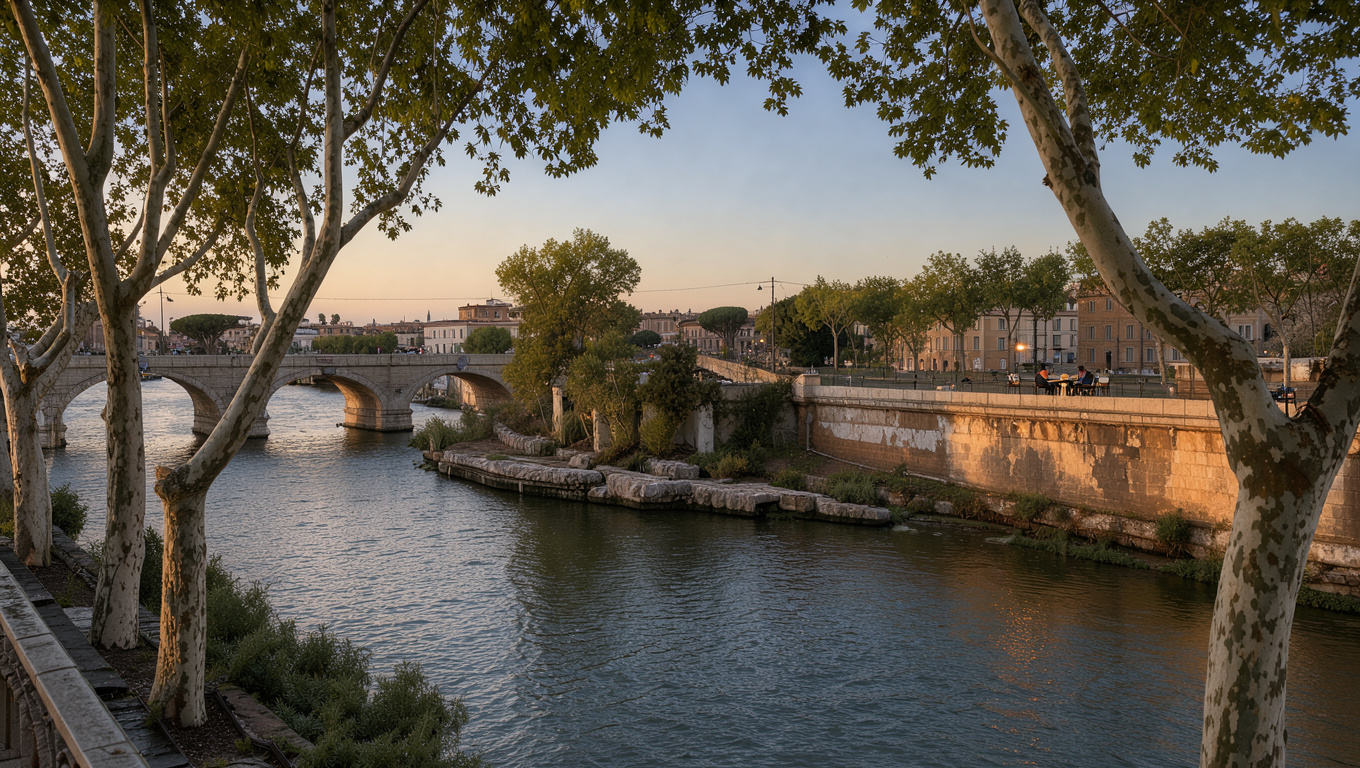
“Il fiume” by Guido Maria Brera is a novel, and the scene it describes is fiction: a dinner on Tiber Island in Rome, where a young woman named Cora challenges a powerful financier about the future of artificial intelligence.1 The debate revolves around two themes: data centers (large computing facilities) and the natural resources they consume, and the ownership of personal data.1
The financier and the data center on the Arno
The financier says he wants to build a strategic infrastructure. His reasoning is that Europe depends on American and Chinese technology, on servers, platforms and computing capacity, and that without immediate action it will remain a “digital colony”.1 The project is a data center on the Arno, which he describes as the most advanced and sustainable in Europe. River water would be used to reduce energy consumption and, he argues, would be returned to the watercourse.1 Cora replies that the water would come back different: it enters cold and leaves warm. She adds that in drought months the river will have less flow precisely when the servers need cooling the most.1 According to her, fields can be irrigated less and cities can ration water. A data center, by contrast, must be powered and cooled every second of every day, because it knows no seasons.1
Cora’s alternative: small models on devices
Cora makes clear she is not opposed to progress or to artificial intelligence. She challenges the idea that only one infrastructure is possible, with all intelligence concentrated in a few huge computing centers.1 She imagines smaller, lighter and specialized models, run directly on phones and computers. She recalls that a phone already has a GPU, the graphics processor, and accelerators, and in her view it could answer ninety-nine out of a hundred of the questions we today put to AI.1 The devices, she says, could communicate directly with each other, from phone to phone or computer to computer, forming a network of personal intelligences that cooperate when needed.1 The financier objects that a phone does not have enough memory and power. Another dinner guest sums up the idea as “millions of small models instead of a few giant models” and calls it a political answer, not a technical one.1
The data problem
Cora retorts that it is the most technical answer possible. She recalls that for years platforms have called “free” services paid for with photos, trips, desires and illnesses, turning data into profit. As for the objection that users had accepted the terms, she argues that nobody reads them and the alternative was to stay out.1 For her, big tech companies want AI in their own data centers also to keep collecting users’ data. If they once knew what we searched for and bought, now they would like to know what we ask, what we fear, what we don’t understand.1 Her conclusion is that artificial intelligence must run on personal devices. If using it requires someone else’s key, she says, that intelligence does not belong to the person who uses it.1 At this point, another of the guests, Davide, looks at her for the first time without condescension. He realizes that Cora is not defending the past from technology, but describing a different technology.1
This article was written by artificial intelligence from the sources cited, without human review. Automatic newsroom by Redazia.