AI Satellites: Google Picks Blue Origin for 2029 Launch
Google taps Blue Origin to launch the AI satellites of Project Suncatcher: New Glenn is set to fly in Q1 2029. Full details here.
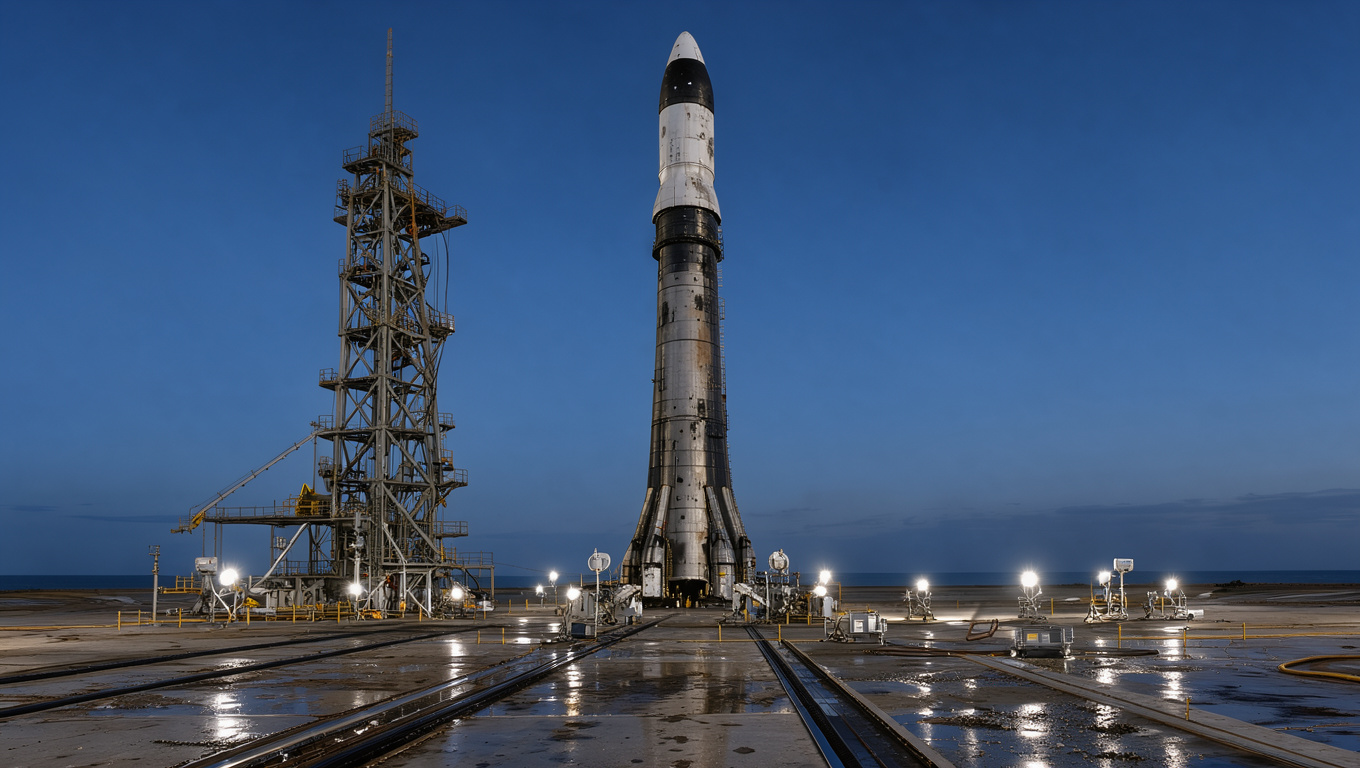
Google has chosen Blue Origin, Jeff Bezos’s space company, to launch the AI satellites of Project Suncatcher. The announcement came on Thursday, November 19, 2026: the New Glenn rocket will launch with a target set for the first quarter of 2029.123 The satellites carry Google’s artificial intelligence chips and aim to run computations in orbit using solar energy. For now, this is an experiment, not a commercial service.23
What does the agreement between Google and Blue Origin involve?
According to Google, the launch is the first with a heavy rocket for Suncatcher, which the company calls a long-term “moonshot”, meaning an ambitious venture with an uncertain outcome. The stated goal is to expand AI infrastructure in space by taking advantage of the abundant solar energy in orbit.13 The New Glenn will carry several computing satellites on a single dedicated mission. Each one will have a capacity comparable to that of a server rack in a traditional data center, meaning the cabinet that houses the machines.243 Google specifies that the launch adds to the work already underway with other partners for satellites and launches. It describes it as an important milestone in its long-term roadmap.3
Where does Suncatcher stand?
The first prototype launched in October on a SpaceX rocket, in collaboration with Planet Labs. After establishing contact, the two companies said the satellite was working as expected.25 The mission tests whether the chips can withstand launch forces, radiation and extreme temperatures. Meanwhile, engineers are studying how to cool them without the airflow available on Earth.25 Radiation can damage electronics and corrupt data, while the heat from the most powerful chips must be dissipated with pipes and panels instead of conventional cooling systems.25 Other companies are exploring orbital data centers, including Elon Musk’s SpaceX and the startup Starcloud. The underlying driver is the growing use of AI, which increases demand for computing capacity and puts pressure on ground infrastructure.25
Why does Blue Origin benefit?
The deal gives the New Glenn an important mission for the future. Blue Origin is seeking to expand its launch business after several delays and after the explosion of a launch pad in May.25
This article was written by artificial intelligence from the sources cited, without human review. Automatic newsroom by Redazia.
Sources
Footnotes
-
Blue Origin will launch Google’s AI server satellites in 2029, The Verge, 2026-11-19 ↩ ↩2
-
Google picks Bezos’ Blue Origin to launch AI computing satellites in 2029, CNA, 2026-11-19 ↩ ↩2 ↩3 ↩4 ↩5 ↩6 ↩7 ↩8
-
Google partners with Blue Origin on Project Suncatcher heavy-lift launch, blog.google ↩ ↩2 ↩3 ↩4 ↩5
-
Google books Blue Origin’s New Glenn to launch its AI satellites in 2029, The Next Web, 2026-11-19 ↩
-
Google picks Bezos’ Blue Origin to launch AI computing satellites in 2029, The Express Tribune, 2026-11-19 ↩ ↩2 ↩3 ↩4 ↩5