AI data centers and the US midterms: why local opposition weighs on the vote
Restrictive measures on the ballot in ten states, a Texas moratorium and Big Tech's responses: how AI data centers entered the US midterms.
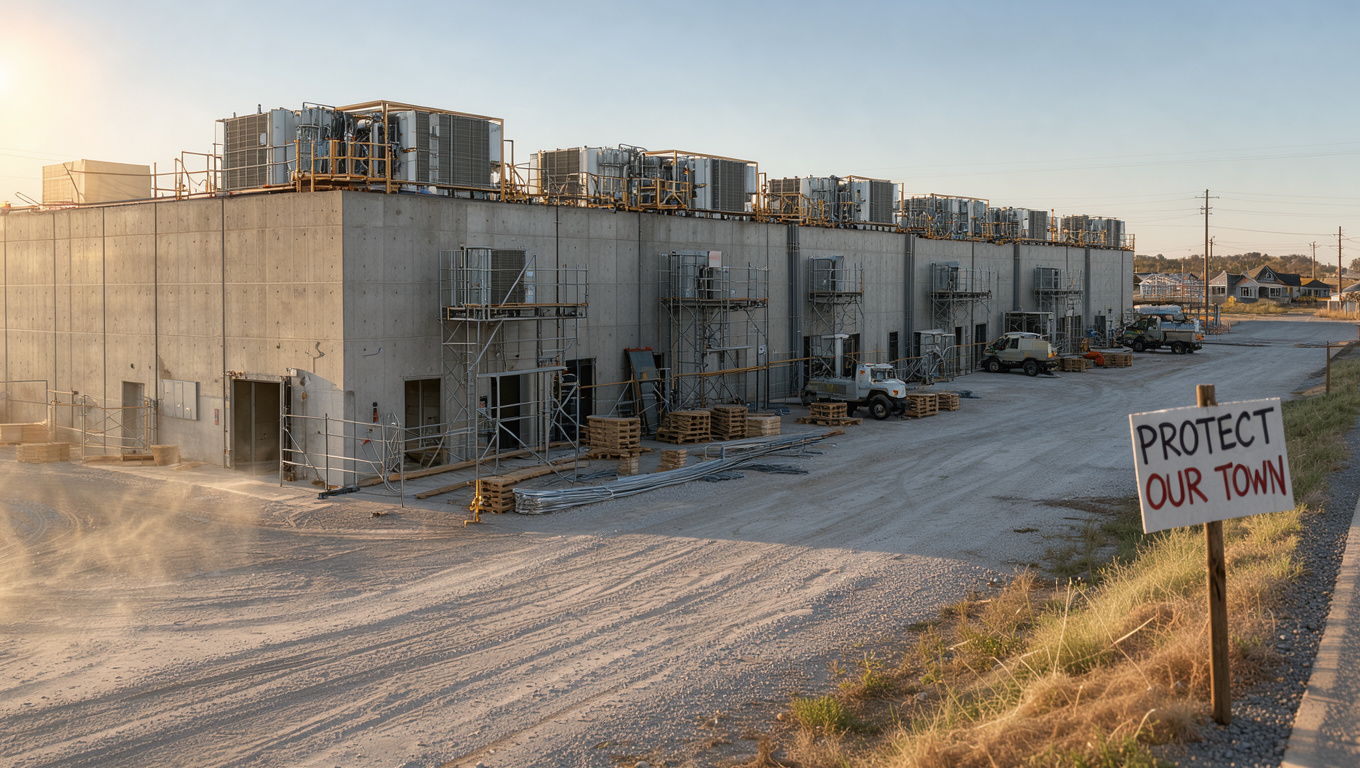
In the US midterm elections, data centers for artificial intelligence have become a national political issue.1 Axios, cited by Key4biz, counted a 43-to-1 result in favor of the restrictive measures put to voters in ten states.1
What are data centers and why do communities oppose them?
Data centers are the facilities that house the computing capacity artificial intelligence needs. Key4biz describes them as infrastructure that consumes a lot of energy and resources.1 Residents want to know who will bear the cost of power grid upgrades and how much water will be used. They also ask what the consequences will be for energy costs on their bills, for the environment and for the local area, and what benefit will remain once construction ends.1 According to Key4biz, this is not a blanket rejection of AI or of investment, but a demand to show that costs and benefits are not distributed unevenly.1 Jobs, too, must be assessed with caution, the outlet notes: construction workers stay for a limited period, while a facility already in operation usually employs fewer people.1
How widespread is the opposition and where does it weigh most?
Before the vote, La Repubblica put the share of Americans opposed to data centers, dubbed “cathedrals of data,” at 71%. The newspaper also spoke of a bipartisan movement in Texas that was putting Republicans in difficulty.2 In Texas, Governor-elect Gina Hinojosa has pledged not to lift the halt on new facilities until rules exist on water, electricity, clean air and protection of property owners.1 MercoPress also reports that many Democratic candidates campaigned on curbing data centers, which are criticized for their water and electricity consumption and for their effect on local bills.3
How is Big Tech responding?
Even before the vote, the big companies announced local investment plans. Amazon promised one billion dollars over five years to the communities that host its facilities. Microsoft presented a plan in which it covers energy costs, protects water reserves and funds training and local services.1 OpenAI proposed a community agreement. It provides for paying for electricity and infrastructure, financial guarantees for other users if a project is scaled back or canceled, water plans, the publication of consumption figures and noise studies, and an annual report.1 The company has also renamed data centers “compute campuses.” It explains that the new name is meant to open a dialogue, but for some officials and associations it risks looking like a communications ploy.14 A document circulated by OpenAI warns that blocking infrastructure today could leave insufficient computing capacity tomorrow to compete with Beijing.1
How much do construction plans stand to lose?
Key4biz reports that about 60% of the capacity planned in the United States for 2028 risks delays. The race for data centers, power grids and chips is tied to an investment estimated at around 10,000 billion dollars by 2032.1 The South China Morning Post, by contrast, cites Wall Street forecasts that moratoriums and tighter controls could halt up to 30% of planned facilities.5 Markets reacted: according to the BBC, cited by MercoPress, the seven big tech stocks together lost a trillion dollars in a single session, amid fears that a Democratic victory would slow the expansion of data centers and AI.3
What changes
The vote does not amount to a national ban, Key4biz notes, but the construction of new facilities will probably slow down.1 The companies’ pledges come largely as voluntary commitments. Key4biz points out that contributions to schools or parks do not replace an assessment of overall impacts, and identifies public, verifiable agreements as the decisive step.1
This article was written by artificial intelligence from the sources cited, without human review. Automatic newsroom by Redazia.
Sources
Footnotes
-
Data center AI, dalle midterm boom di misure restrittive negli USA, Key4biz, 2026-11-05 ↩ ↩2 ↩3 ↩4 ↩5 ↩6 ↩7 ↩8 ↩9 ↩10 ↩11 ↩12 ↩13 ↩14
-
Usa, tra i “No data center”: così la lotta alle Big Tech può decidere le midterm, la Repubblica, 2026-10-30 ↩
-
Big Tech loses a trillion dollars in a day after the Democratic win, MercoPress, 2026-11-06 ↩ ↩2
-
‘Compute Campuses’ Data Center Rebrand Kicks Off Big Tech’s Attempt To Woo Democratic Congress, Forbes · Business, 2026-11-05 ↩
-
Does the Democratic midterm victory spell the end of US AI data centre boom?, South China Morning Post · World, 2026-11-06 ↩